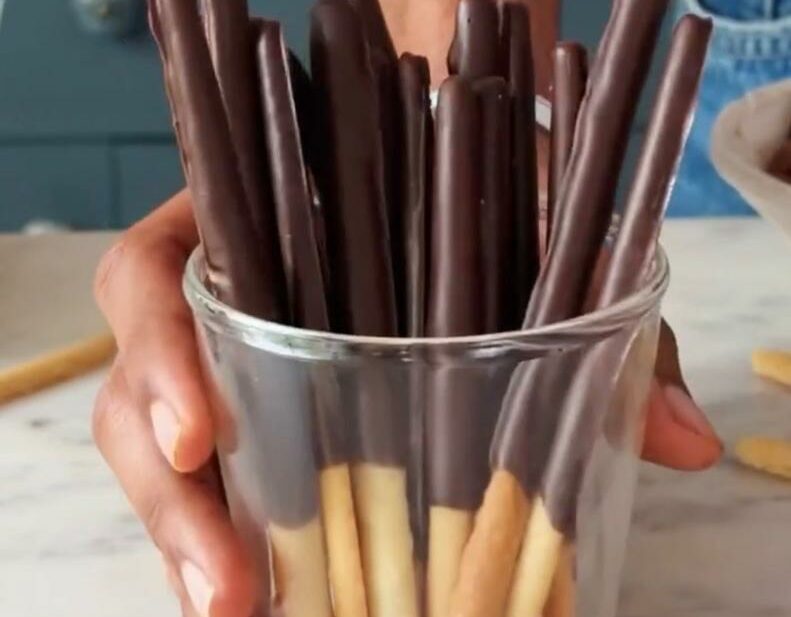
There is something undeniably nostalgic about opening a box of Pocky. The satisfying snap of the biscuit, the silky chocolate coating, and the convenience of holding the uncoated end make it one of the world’s most beloved snack treats. While store-bought Pocky has earned its iconic status, making homemade Pocky sticks elevates the experience into something even more special. Homemade Pocky is not simply a copy of the original, it is an opportunity to create a fresher, more flavorful, and endlessly customizable version. Every element can be tailored to your preferences, from the sweetness of the biscuit to the richness of the coating and the decorative toppings that transform each stick into an edible work of art.
Whether you’re baking for an afternoon tea, gifting homemade treats, preparing party favors, or simply indulging your love for baking projects, homemade Pocky sticks strike the perfect balance between elegance and playfulness. Unlike ordinary cookies or biscuits, Pocky relies on contrast. The biscuit portion is intentionally light, crisp, and only mildly sweet. Rather than competing with the coating, it serves as the perfect canvas for it. The chocolate or flavored coating provides richness, creaminess, and sweetness, while the exposed end functions as a built-in handle that keeps fingers clean. This thoughtful design transforms an everyday biscuit into an interactive snack that is enjoyable to eat and beautiful to serve.
WHAT YOU’LL LOVE ABOUT THE RECIPE
- Eggless
- Made with staple pantry ingredients
- Nostalgic
- Endless flavour possibilities
- No fancy equipment needed
INGREDIENTS USED IN HOMEMADE POCKY STICKS
-
BUTTER
Butter is one of the most important ingredients in homemade Pocky sticks, contributing far more than just richness. It influences the dough’s texture, flavour, structure, and the signature crisp snap that makes Pocky so enjoyable. The fat in butter coats the flour particles, controls gluten development, and creates a delicate, melt-in-the-mouth biscuit that pairs perfectly with the chocolate coating. One of butter’s primary functions is to enhance flavour. Its natural dairy notes give the biscuit a subtle richness that complements the dark chocolate without overpowering it. As butter melts in the oven, it distributes heat throughout the dough, encouraging even baking and a consistent golden colour.
-
ICING SUGAR
Icing sugar, also known as confectioners’ sugar or powdered sugar, plays a much more significant role in homemade Pocky than simply adding sweetness. Because it is finely ground and often contains a small amount of anti-caking agent such as cornstarch, it blends seamlessly into the dough, contributing to the biscuit’s delicate texture and crisp bite. One of the defining characteristics of Pocky is its light, crisp biscuit. Icing sugar helps achieve this by limiting the development of gluten in the dough. Icing sugar offers a gentle, even sweetness that enhances the flavour without overpowering the coating, resulting in a balanced bite.
-
ALL PURPOSE FLOUR
All-purpose flour is the structural foundation of homemade Pocky sticks. While ingredients like butter contribute richness and icing sugar provides sweetness, it is the flour that gives the biscuit its shape, strength, and signature crisp bite. The right amount of flour creates a dough that is easy to roll into thin, even sticks and sturdy enough to support the chocolate coating without becoming dense or hard. The primary role of all-purpose flour is to build the framework of the Pocky stick. When combined with moisture and mixed, the proteins in the flour form gluten, which gives the dough enough strength to hold its shape during rolling, cutting, and baking. Flour evenly distributes butter, sugar, salt, and flavourings throughout the dough. This ensures every bite has a consistent texture and flavour while helping the ingredients work together to create a smooth, cohesive dough.
-
DARK CHOCOLATE
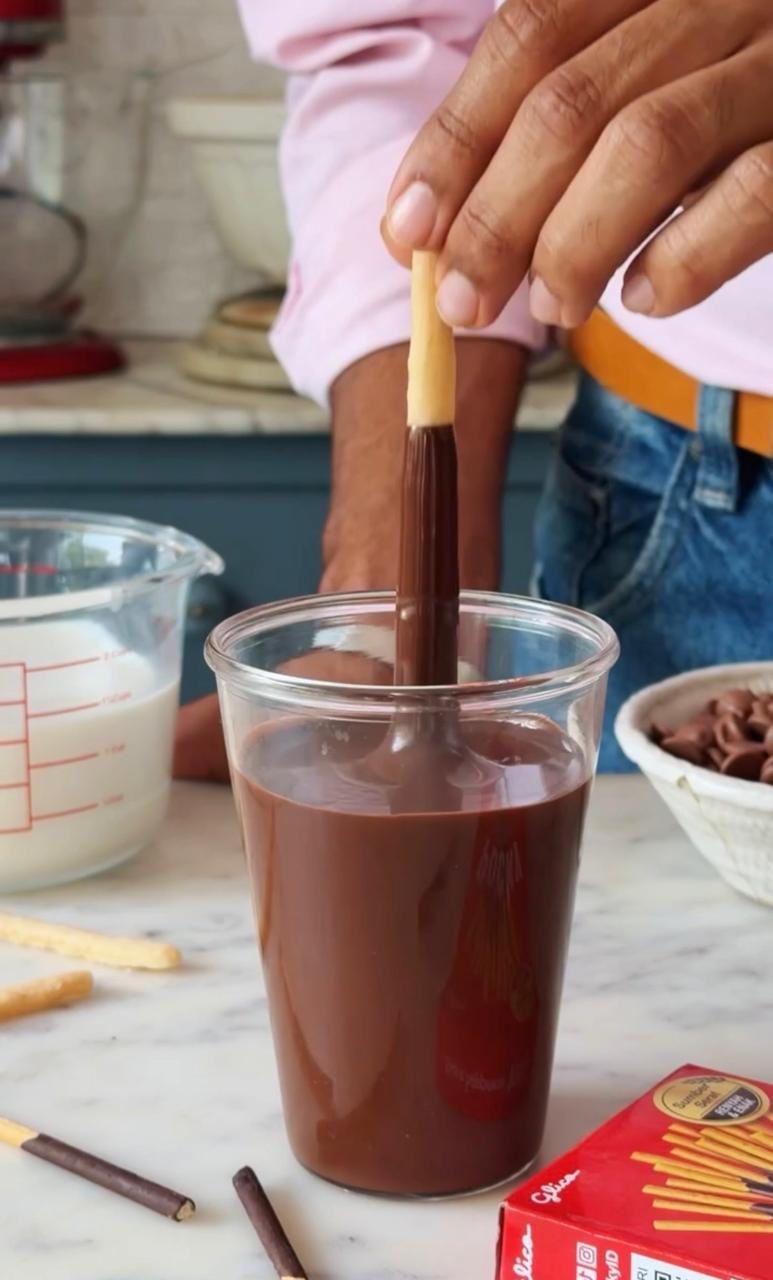
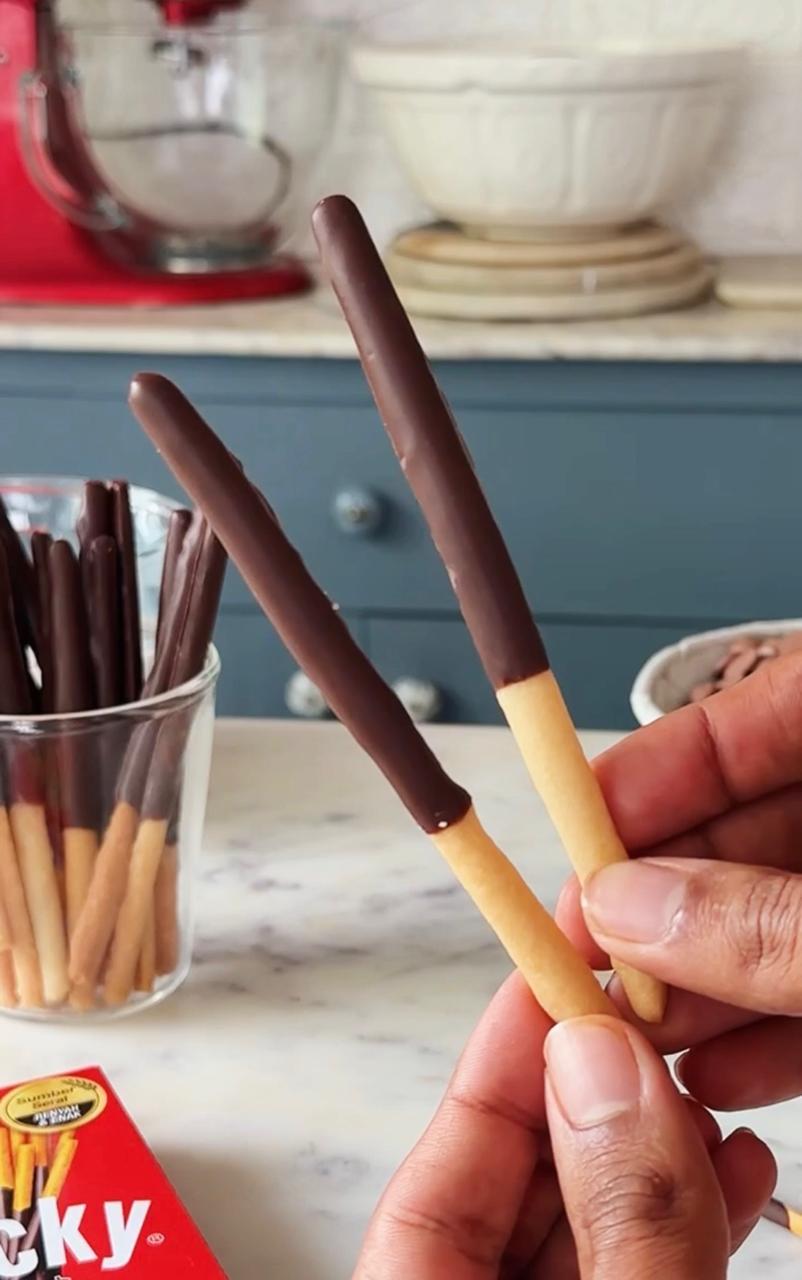
Melted dark chocolate is the defining feature of homemade Pocky sticks, transforming a simple crisp biscuit into an indulgent, elegant treat. While the biscuit provides the structure and signature snap, the dark chocolate coating contributes richness, flavour, visual appeal, and a luxurious mouthfeel. A smooth, well-set chocolate coating is what gives Pocky its unmistakable identity. The primary role of melted dark chocolate is to create the smooth outer layer that coats the biscuit stick. This coating adds a rich chocolate flavour while protecting the crisp biscuit from direct exposure to air and humidity. The contrast between the crunchy biscuit and the silky chocolate is what makes Pocky so satisfying to eat.
EQUIPMENTS USED IN MAKING HOMEMADE POCKY STICKS
Measuring Cups and Measuring Spoons are an integral part of any baker’s kitchen and it’s very important to measure ingredients with precision.
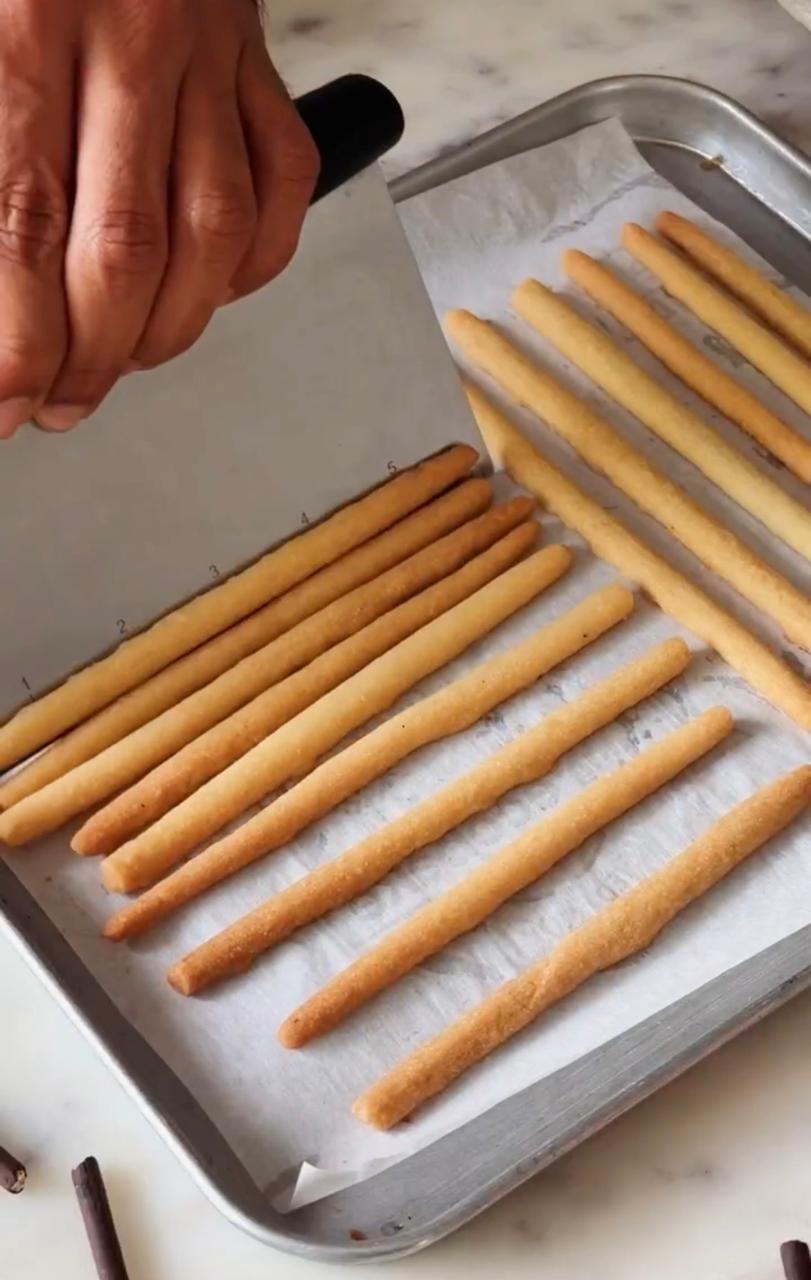
Mixing bowls and spatula are required to help to bring in the dough together. A bench scraper and parchment paper are also needed to shape the Pocky sticks.
RELATED RECIPES FROM THE BLOG
TIPS TO KEEP IN MIND WHILE MAKING HOMEMADE POCKY STICKS
- Measure ingredients with precision. Since Pocky dough contains only a few ingredients, even small measurement errors can affect the texture.
- Use room-temperature butter. Softened butter creams more easily with icing sugar, producing a smooth and uniform dough.
- Avoid overmixing the dough. Mix the dough only until the ingredients are combined. Excessive mixing develops more gluten, which can make the biscuit tough instead of light and crisp.
- Chill the dough before shaping. If the dough feels soft or sticky, chill it for 20–30 minutes. Chilled dough is easier to roll thinly, holds its shape better, and reduces the risk of stretching or tearing while cutting.
- Cut uniform strips. Using a sharp knife, pizza cutter, or pastry wheel helps create straight biscuit sticks of equal width.
- Keep space between the sticks while baking. Arrange the biscuit sticks with a small gap between them on the baking tray. Proper spacing allows heat to circulate evenly and prevents the sticks from sticking together as they bake.
- Do not overbake. Because Pocky sticks are thin, they bake quickly. Bake until the edges are lightly golden while the centers remain pale golden.
- Cool the biscuits completely. Never dip warm biscuit sticks into melted chocolate. Heat from the biscuits can cause the chocolate to become runny, resulting in an uneven coating. Cooling also allows the biscuits to become fully crisp.
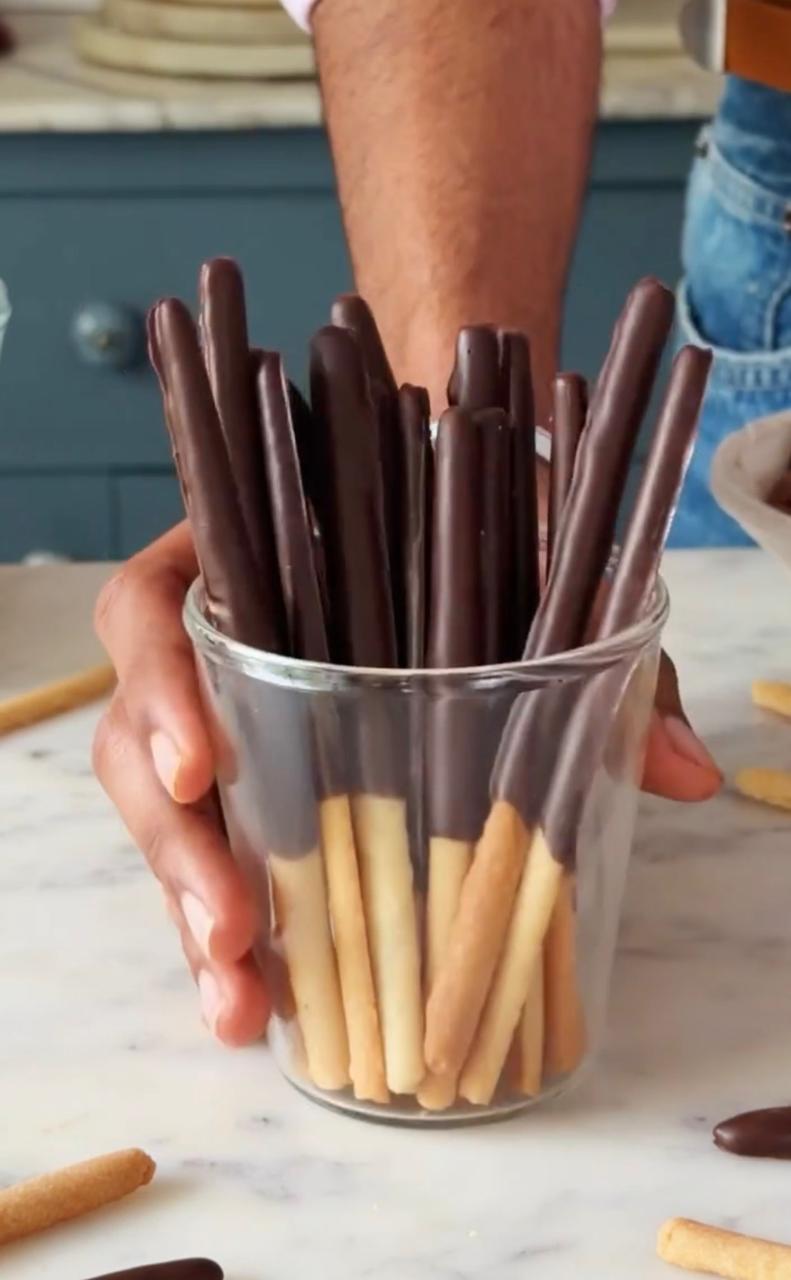
- Dip each biscuit stick smoothly while leaving a small portion uncoated to create the traditional handle. Rotate the stick gently as you lift it from the chocolate to ensure an even coating and minimize drips.
- Allow the chocolate to set completely. Place the coated sticks on baking paper or a wire rack and let the chocolate harden completely before moving or packaging them. This prevents fingerprints, smudges, and damaged coatings.
- Store the finished sticks in an airtight container away from direct sunlight and moisture to maintain their crisp texture and glossy chocolate finish.
- ½ cup (113g) salted butter
- ½ cup icing sugar
- ½ tsp vanilla extract
- 1 cup all purpose flour
- ½ cup melted dark chocolate
- In a bowl, cream the butter and icing sugar until pale.
- To this, add in the vanilla extract and all purpose flour.
- Using a spatula, bring the dough together till there are no flour pockets.
- Cover the dough with cling wrap and place in the freezer for 20-30 minutes.
- Once firm, remove the dough and divide it into equal sized strips.
- Roll it on the counter to form a rectangular log shape. Then, place it on a parchment paper and fold it. Using a bench scraper, shape the dough into sticks.
- Place the sticks on a baking tray lined with a silicon mat.
- Bake for 12 minutes at 180 degrees Celsius. Let the biscuits cool completely.
- Transfer the melted dark chocolate into a glass. Dip and coat ⅔ length of the pocky sticks with the chocolate.
- Place it on a tray lined with parchment paper and let the chocolate harden completely.
- Store the pocky sticks in an airtight container for upto a week.
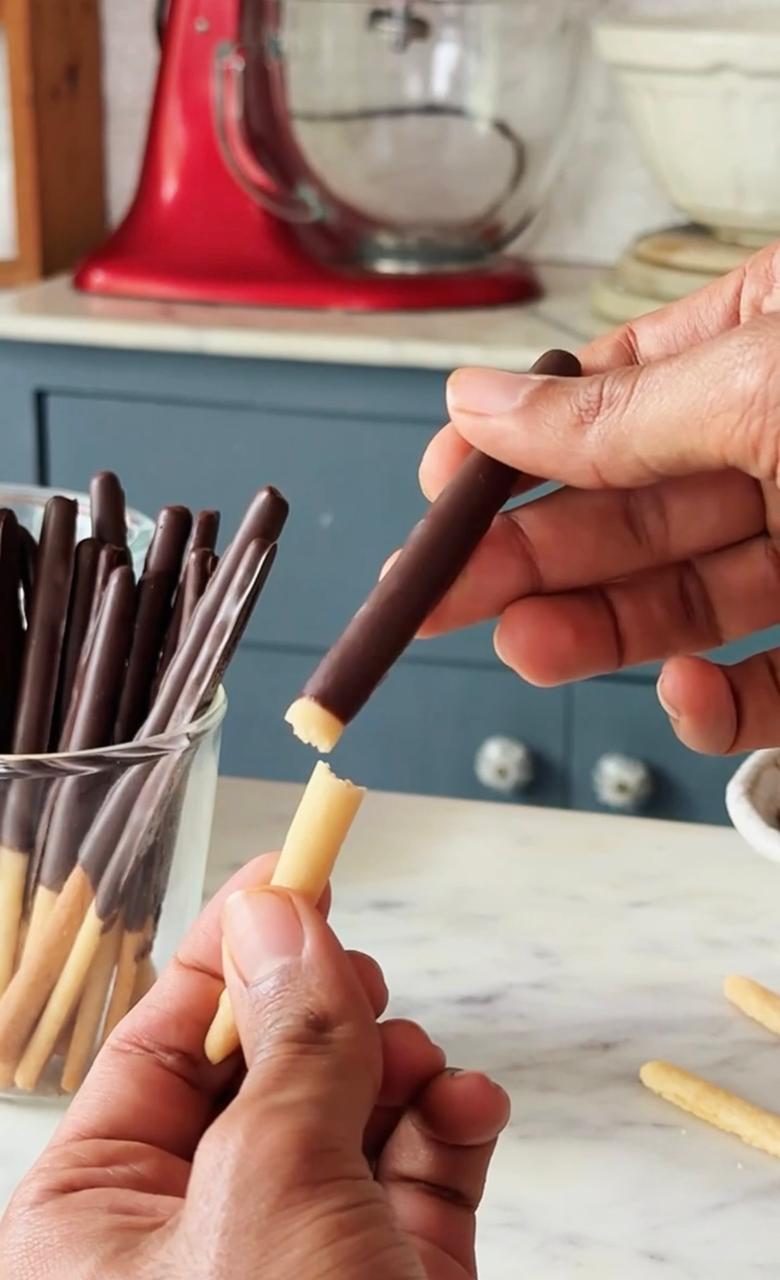
If you like my homemade Pocky sticks recipe and happen to make them in your kitchen, do tag me on Instagram and share pictures with me using #Bakewithshivesh. Happy Baking!
 Hello. I'm Shivesh Bhatia, a food blogger and food stylist from Delhi, India. Welcome to Bake With Shivesh, where I'll help you create magic in your kitchens with my simple recipes.