I still remember the first time I bit into a stroopwafels—tiny wooden market stall in Amsterdam, Netherlands, hands wrapped around a hot cup of coffee, the wafer perched perfectly on top of the mug. That moment felt like a hug from the inside: the crisp waffle yielding to the gooey, warm caramel center, just soft enough to melt on the tongue. The name literally means “syrup waffle” in Dutch—simple, tasty, and utterly charming.
What began as a humble “poor man’s biscuit” by reworking leftovers has evolved into an iconic Dutch treat. And honestly, who can blame them? Digging into a homemade stroopwafel is like pressing play on a memory: the smell of caramel, the sound of the iron pressing dough, the soft snap and gooey tug of the filling.
So, if you’ve ever caught the scent of caramel wafting through a Dutch market or wondered if you can recreate that buttery, gooey perfection at home—this post is your invitation.
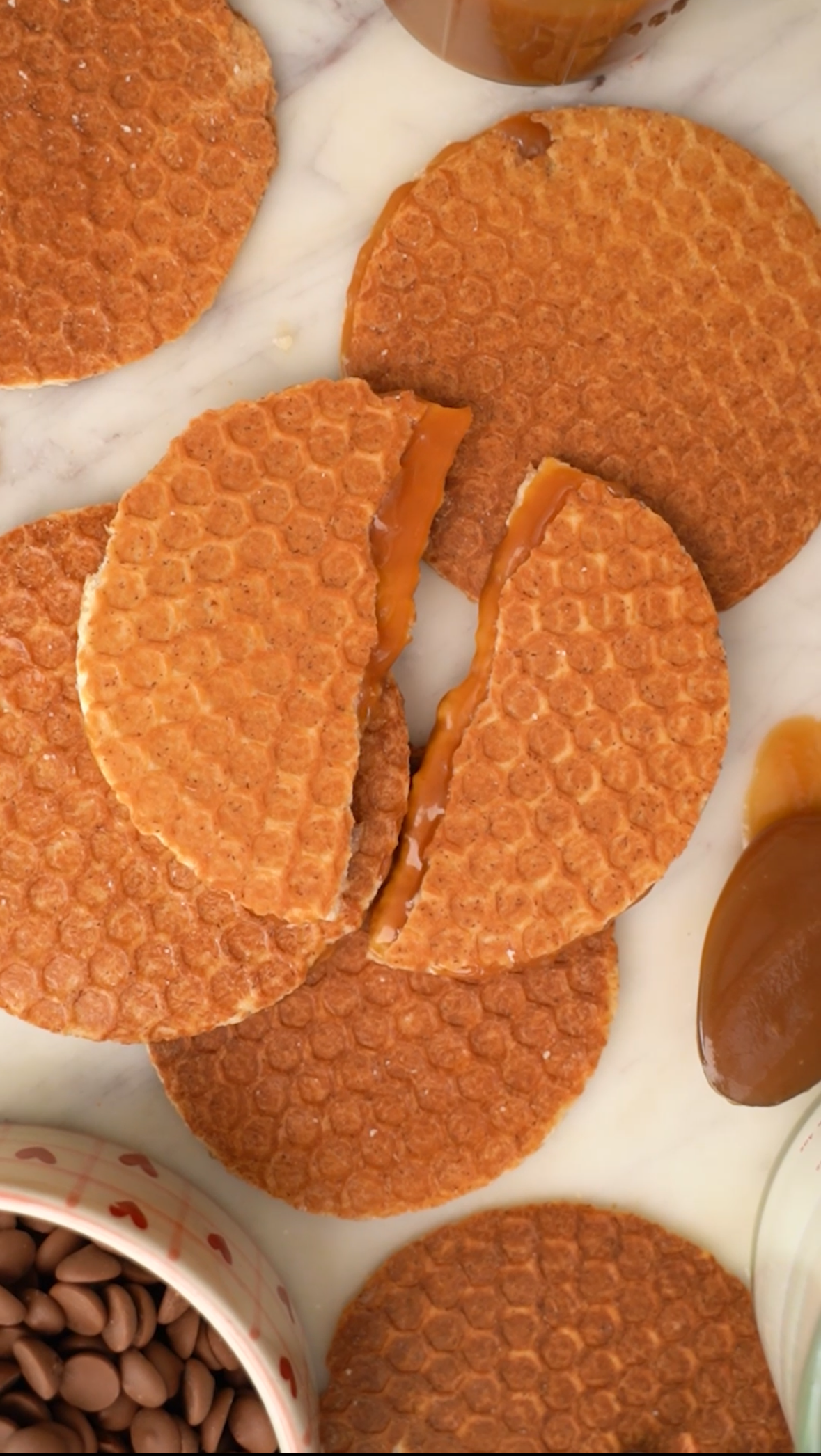
INGREDIENTS USED IN STROOPWAFELS
-
All-purpose flour
All-purpose flour is the backbone of your dough—it provides the protein (glutenin and gliadin) that, upon hydration, forms gluten, which gives the waffle its structure and elasticity. The gluten network traps gases from yeast fermentation, helping the dough hold shape and develop a thin, crisp waffle. Flour’s starches absorb liquid and swell, contributing to dough cohesion and texture.
Also, flour adds a neutral, slightly sweet flavor that balances the richness of butter and caramel. Overall, it’s essential for both the chew and the crispness in the final stroopwafel.
-
Milk
Milk hydrates the flour, enabling gluten formation and giving the dough the right consistency for rolling and pressing. Its proteins and fats enrich the dough, contributing to tenderness and a fine crumb. Milk also adds lactose, which enhances browning and flavor in the hot iron. If the dough is too stiff, additional milk in small increments helps maintain pliability without overhydration. The warmth of the milk when mixed with yeast aids yeast activation (if it’s a bit warm), improving fermentation. Overall, milk ensures the dough is soft and workable while enhancing flavor and color.
-
Butter
Butter adds richness and flavor—its fat provides a tender, melt-in-your-mouth quality, giving stroopwafels their characteristic buttery taste and texture. It coats gluten strands, inhibiting excessive gluten development, which makes the waffle more tender and delicate. Butter also contributes moisture and helps the dough stay pliable, which is crucial for rolling and shaping. When pressed in the hot waffle iron, the butter slightly fries the edges, promoting browning and crispness. In the final warmed waffle, the residual butter ensures a supple yet crisp bite. Lastly, butter enriches the filling when included, giving the caramel layer a smoother, more indulgent mouthfeel.
-
Sugar
Sugar provides sweetness and also plays multiple structural roles. It feeds the yeast during resting, helping with fermentation and flavor development. In the waffle iron, sugar caramelizes, promoting browning and creating that signature crispy, golden surface. It also tenderizes the dough by drawing in and holding moisture, preventing excessive dryness, and balancing gluten development for a softer texture. Sugar complements the rich, buttery flavor and underpins the caramel filling’s sweetness. Without sugar, stroopwafels would lack both flavor and that delicate surface sheen that makes them visually appealing and delicious.
-
Yeast
Yeast acts as the leavening agent—fermenting sugars to produce carbon dioxide, which expands and creates tiny air pockets in the dough. This fermentation process adds subtle flavor complexity and aroma, lending a depth you don’t get with chemical leaveners. Although stroopwafel dough is thin, that slight lift makes slicing easier and prevents it from becoming too brittle. Resting/fermentation time (about 45 minutes) allows the dough to relax and develop gluten structure while mellowing any raw flour taste. Yeast also contributes to browning through Maillard reactions, enhancing the waffle’s golden hue. Together, this results in a crisp yet flexible texture that can be sliced horizontally without crumbling.
-
Yogurt
Yogurt introduces acidity, which relaxes the gluten network, making the dough more tender and easier to work with—ideal for a thin, pliable waffle that can be split. It also contributes moisture and creates a tighter crumb, making the stroopwafel tender rather than tough. Yogurt’s tang adds subtle complexity to the flavor, balancing the sweetness with a gentle tanginess. Dairy proteins and minerals in yogurt enrich the dough, enhancing mouthfeel and nutritional content. Moreover, it can help reduce staling, keeping waffles softer longer. Yogurt also can interact with the yeast and fermentation in nuanced ways, potentially improving dough volume and texture.
-
Caramel sauce
Caramel sauce forms the signature gooey center that defines stroopwafels—it binds the two halves and provides sweetness and texture contrast. Its viscous nature, when warm, allows easy spreading between the hot waffle layers, sealing them with a soft, cohesive bond. As it cools, the caramel sets slightly, creating that delightful balance between chewiness and crisp waffle exterior. The rich caramel flavor—often enhanced with butter, molasses, or cinnamon—deepens the overall taste profile. It also contributes moisture retention, helping the stroopwafel stay soft and fresh longer. The filling visually complements the waffle, giving an inviting caramel sheen when bitten.
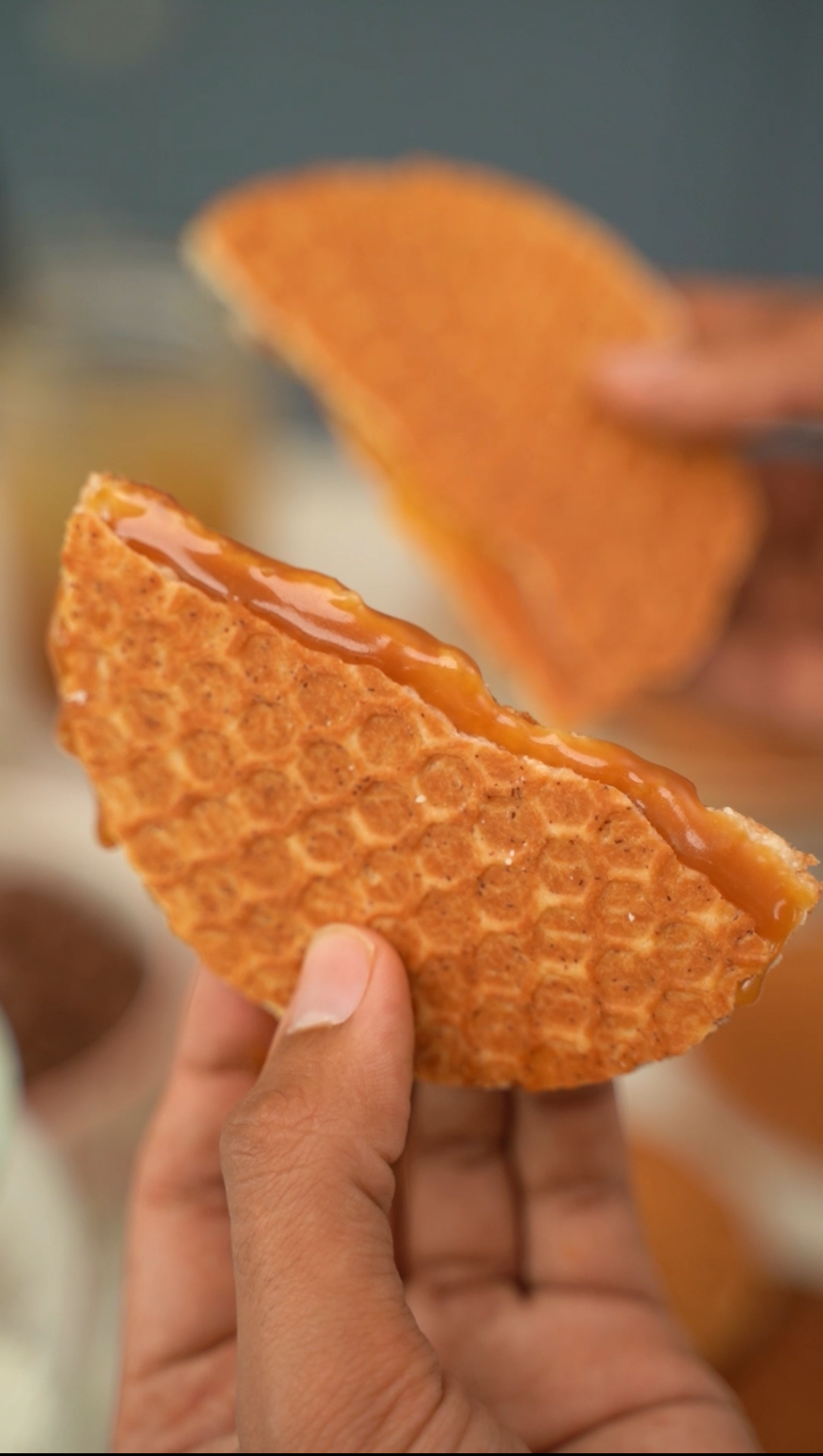
EQUIPMENTS USED IN MAKING STROOPWAFELS
A few kitchen equipment are necessary to make the stroopwafels.
Measuring Cups and Measuring Spoons are the first thing that anybody who in cooking or baking needs. The right quantities will help in the desired outcome so these two things are a must. A mixing bowl and whisk are important to bring the batter together.
You will need a waffle cone maker to make the stroopwafel and a shaping tool is also necessary to cut them in their desired shape. I use a large round cookie cutter to achieve it.
A good serrated knife is also very important to give the stroopwafels a clean cut from the middle.
RELATED RECIPES FROM THE BLOG
TIPS TO MAKE THIS STROOPWAFELS
- Have your tools (cookie cutter, knife, spatula, caramel) ready before the dough goes into the iron.
- Always split and fill the waffle immediately after cooking—they crisp up fast and will break or tear once cooled.
- Protect your fingers by wearing thin gloves or laying a paper towel over the waffle when cutting.
- Although the dough contains yeast, it doesn’t rise dramatically—but resting it for 45 minutes improves texture and flavor.
- Store cooled stroopwafels in an airtight container at room temperature. They taste best fresh but will last only a few days.
- 1 cup all-purpose flour
- ¼ cup melted butter
- 1 tsp yeast
- 3 tbsp sugar
- 1 tbsp milk
- 1 tbsp yogurt
- ½ cup caramel sauce, for the filling
- Add all the given ingredients to a clean bowl and combine to form a smooth dough.
- Transfer the dough onto a floured surface and knead for a few minutes. Add milk at this stage if the dough feels too tough. Increase it with 1 tsp at a time.
- Keep the dough back into a bowl and cover it with a damp cloth. Rest it for around 45mins.
- Now, divide the dough into 4-5 equal portions and roll them into balls.
- Heat the waffle cone maker over medium heat till nicely hot.
- Place one ball in the centre and press it hard to make a thin stroopwafel. Once it is golden brown on both the sides, carefully take it out on a wooden board.
- Work very quickly at this stage. Cut the stroopwafel using a big cookie cutter/cake ring to give it clean edges.
- Next, cut the stroopwafel horizontally from the middle.
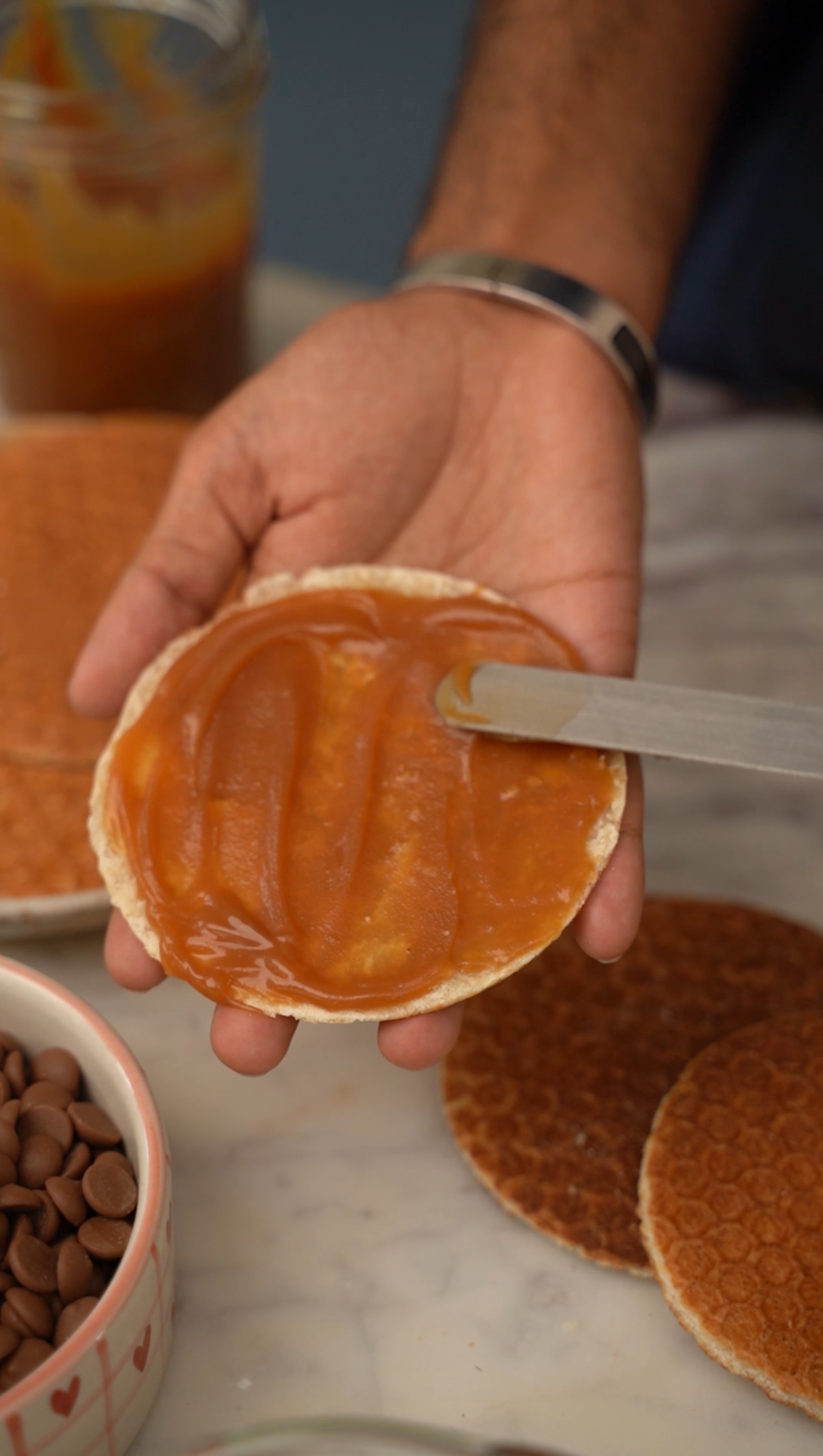
- Spread an even layer of caramel over one of the halved pieces and sandwich it with the other half.
- Enjoy warm!
If you like my Stroopwafels recipe and happen to make them in your kitchen, do tag me on Instagram and share pictures with me using #Bakewithshivesh. Happy Baking!
 Hello. I'm Shivesh Bhatia, a food blogger and food stylist from Delhi, India. Welcome to Bake With Shivesh, where I'll help you create magic in your kitchens with my simple recipes.