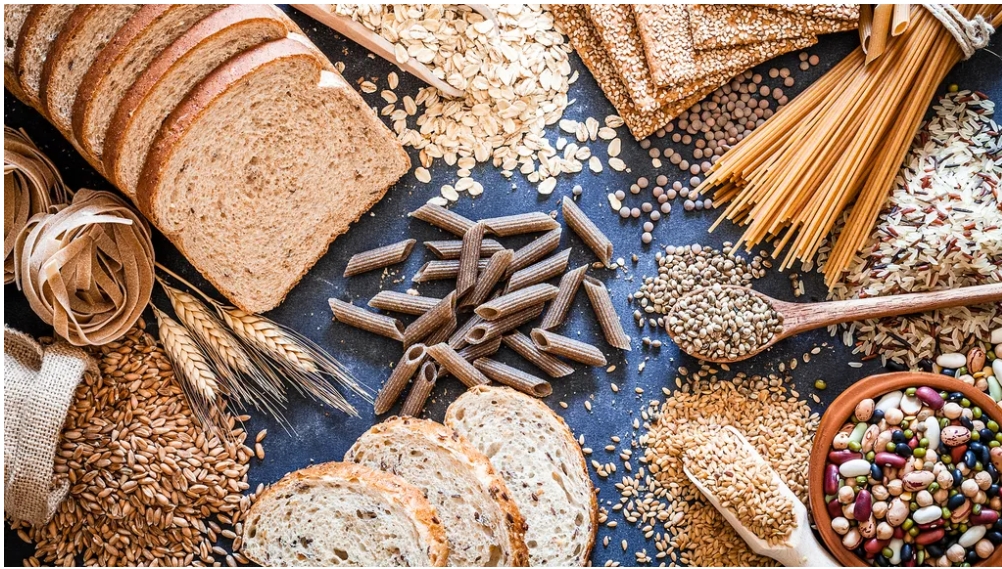
Whether you’re hand-kneading a rustic sourdough or mixing focaccia in a stand mixer, the magical stretchiness of dough is thanks to one word: gluten. But what exactly is gluten? How does it form, and why is it crucial to baking bread, pizza and other wheat-based treats? Let’s break down the fascinating science behind gluten development – breaking down the proteins, hydration, kneading techniques and fermentation that all work together to create a beautifully elastic dough.
Gluten is at the heart of dough’s magical transformation; from a shaggy mass of flour and water to a billowy, airy loaf. By understanding the science behind gluten development, you’ll become a more intuitive and confident baker, capable of adjusting hydration, mixing and fermentation to suit your desired outcome. So, the next time your dough stretches like a dream, you’ll know it’s the gluten at work, one protein bond at a time.
WHAT IS GLUTEN?
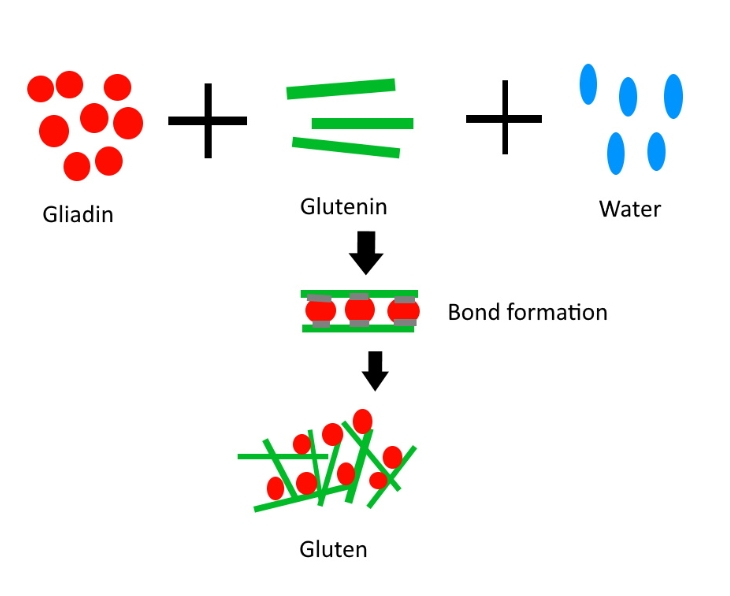
Gluten isn’t a single substance; it’s a protein network formed when two proteins, glutenin and gliadin found in wheat flour combine in the presence of water.
-
Glutenin: Is responsible for elasticity, it can stretch and spring back like a rubber band.
-
Gliadin: Provides extensibility, it allows the dough to stretch without snapping.
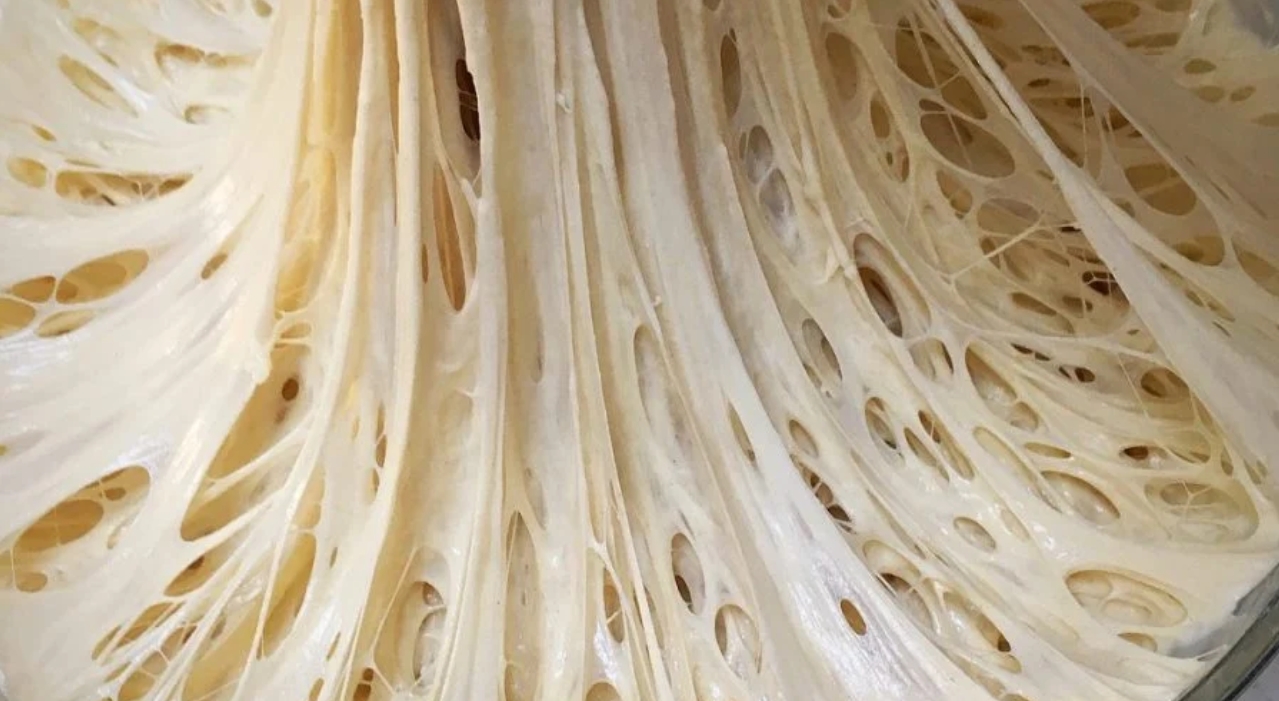
When you mix water into flour, these proteins hydrate, unravel and begin to bond. As you knead or stretch the dough, these bonds strengthen and align into a gluten matrix or a web-like structure that traps gas bubbles from fermentation, allowing dough to rise.
THE FIRST STEP IN GLUTEN DEVELOPMENT: HYDRATION
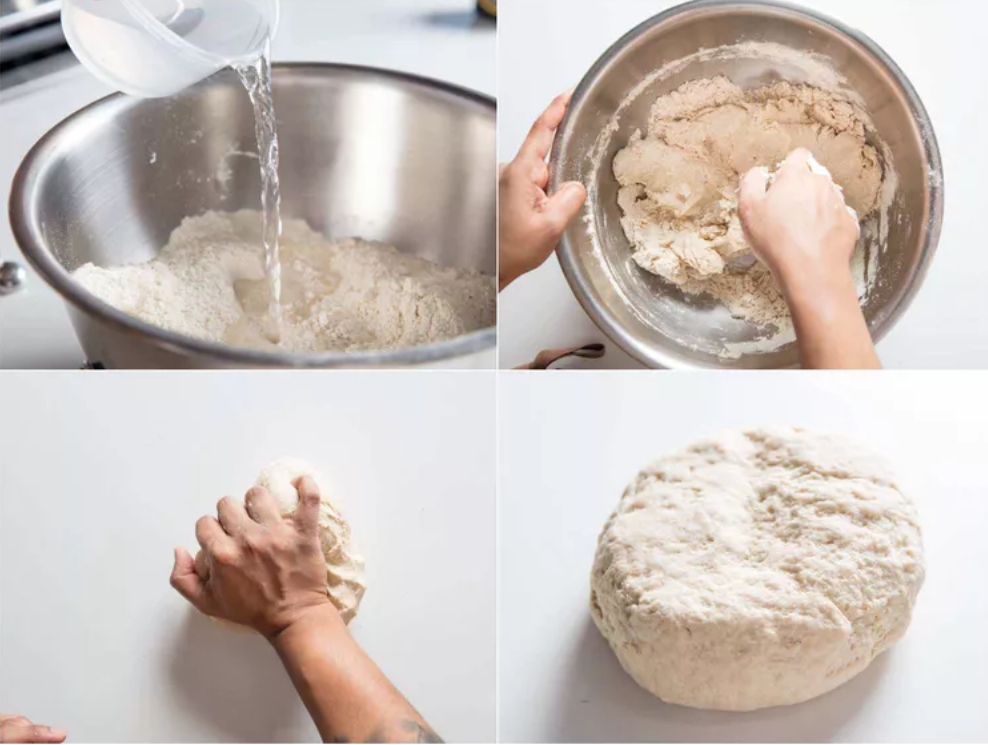
Hydration is key to kickstarting gluten formation. Without water, glutenin and gliadin can’t interact. The typical wheat flour protein content is 10–14%, and hydration levels greatly affect gluten’s behavior. Higher hydration allows proteins more freedom to move and interact, often leading to better gluten development, even with lesser kneading.
THE PURPOSE OF KNEADING
Kneading isn’t just about mixing. It’s about aligning and strengthening gluten bonds. Think of it like building a net, the more you knead, the more ordered and resilient the net becomes. But be careful of over-kneading. It is rare in hand-mixed dough, but in a stand mixer, overworking can break down the network, making the dough sticky and slack.
As you knead:
-
Glutenin chains begin to align in the direction of stretch
-
Disulfide bonds (S–S) form between protein chains, stabilizing the network
-
Gliadin helps the network remain flexible and workable
AUTOLYSE EXPLAINED
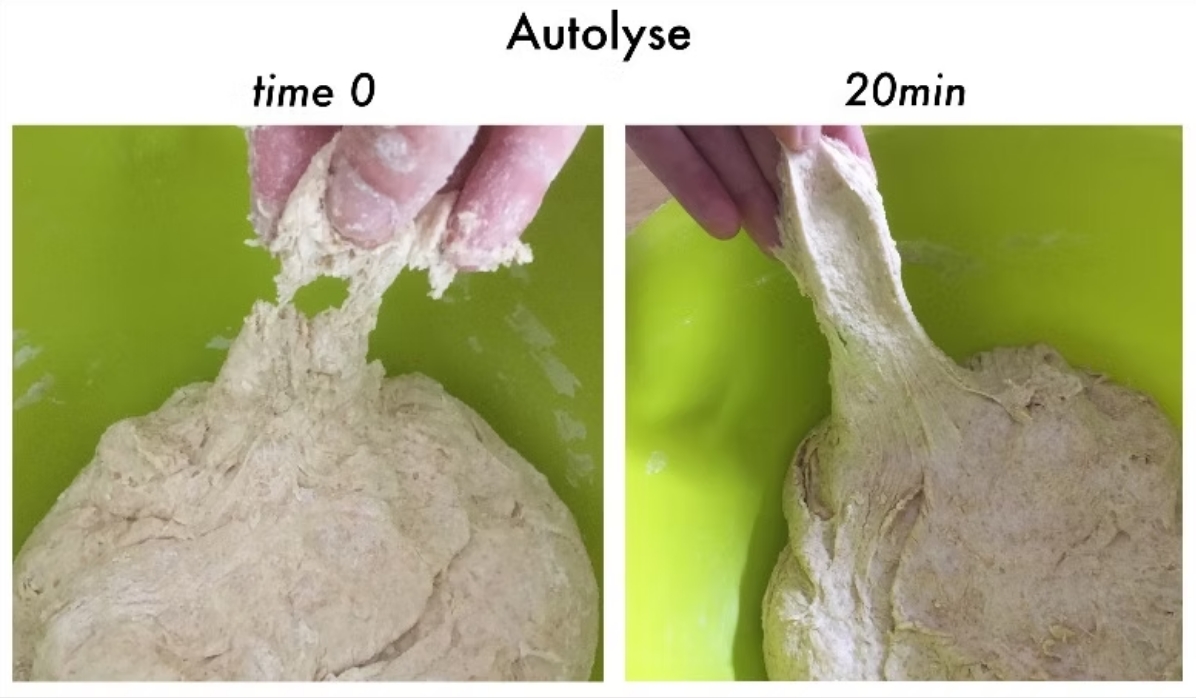
Time can develop gluten without aggressive kneading, this is the principle behind techniques like autolyse and stretch-and-fold.
Autolyse is the resting period (typically 20–60 minutes) after flour and water are mixed but before salt or yeast are added. But, why no salt or yeast? Salt tightens gluten and can slow down water absorption, while yeast starts fermentation too early. You want proteins to fully hydrate first.
The benefits of autolyse are:
-
Gluten forms passively as flour hydrates
-
Dough becomes easier to work with
-
Flavor improves due to enzymatic activity (like amylase breaking down starch into sugars)
STRETCH AND FOLD TECHNIQUE
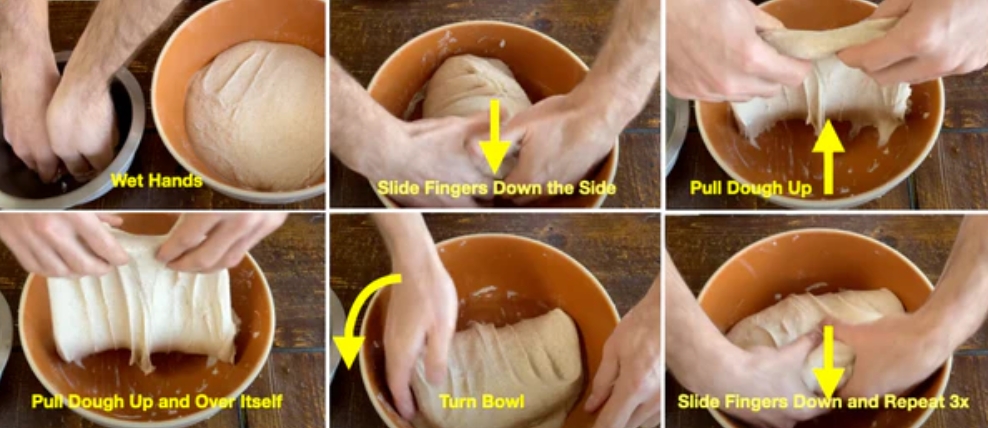
High-hydration doughs (like sourdough) often use stretch and fold techniques instead of kneading. Each fold session improves structure while maintaining an open crumb. Stretch and fold has various benefits, like, gentle stretches realign gluten strands, minimal oxidation preserves flavor and the time between folds allows gluten to relax and reform stronger.
FERMENTATION
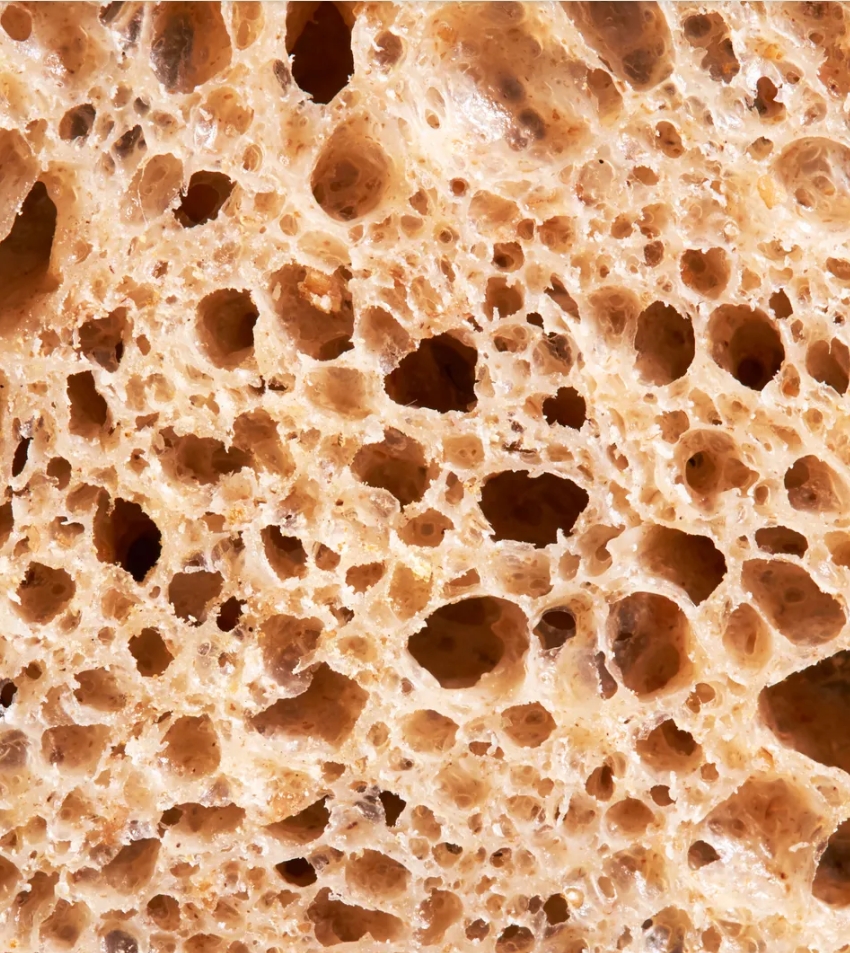
As yeast or sourdough bacteria ferment the dough, they release carbon dioxide (CO₂). Gluten’s role is to trap those gas bubbles. During fermentation, gluten continues to develop naturally. That’s why you often see dough becoming smoother and stretchier over time, even with minimal kneading.
A strong gluten network:
-
Expands to hold gas without tearing
-
Retains shape during proofing and baking
-
Creates a chewy, airy crumb
THE LAST STEP: BAKING
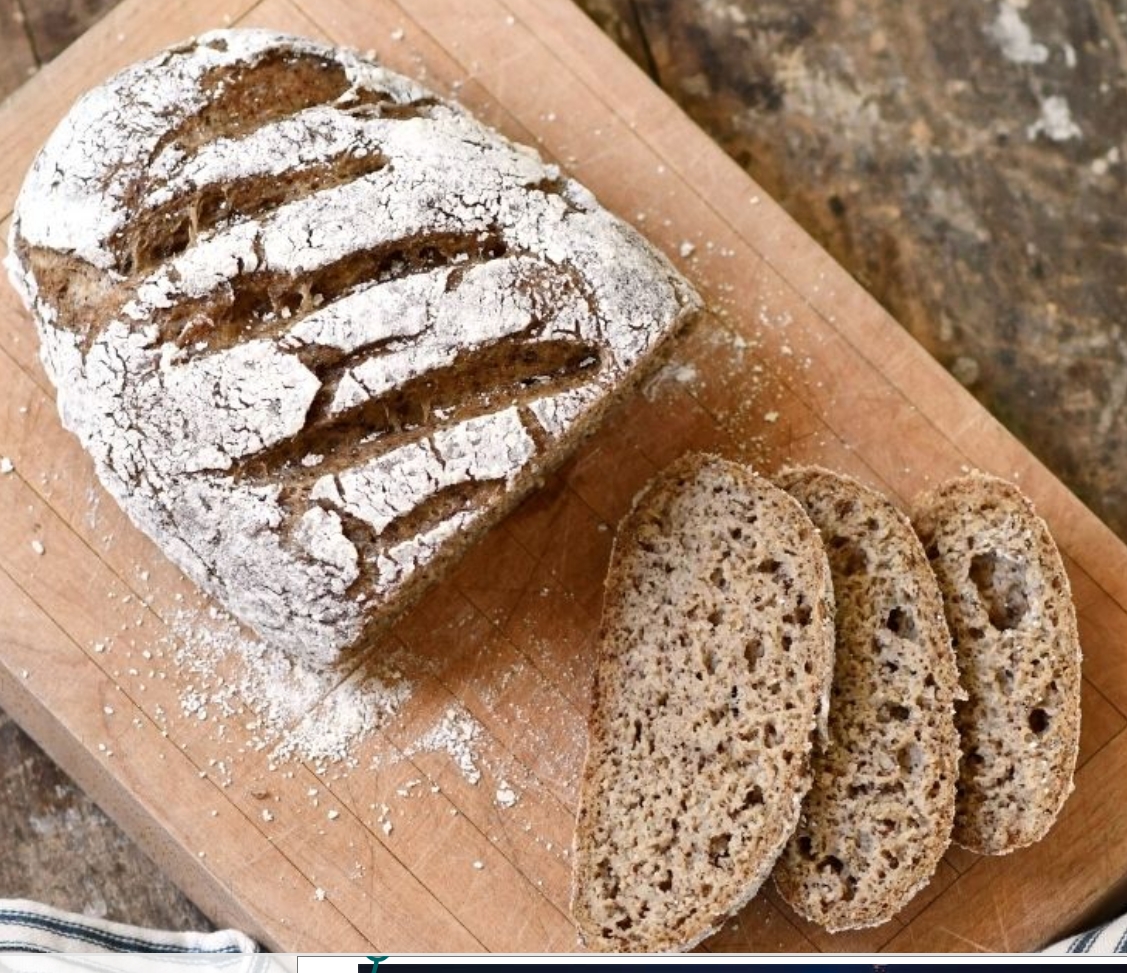
Baking sets the final gluten structure. During baking, oven spring occurs and gluten rapidly expands to trap final gases, heat sets the gluten structure; locking in the crumb and gluten becomes rigid, creating a firm crust and chewy texture.
A weak gluten network = flat loaf
A strong, balanced network = lofty, airy, chewy perfection
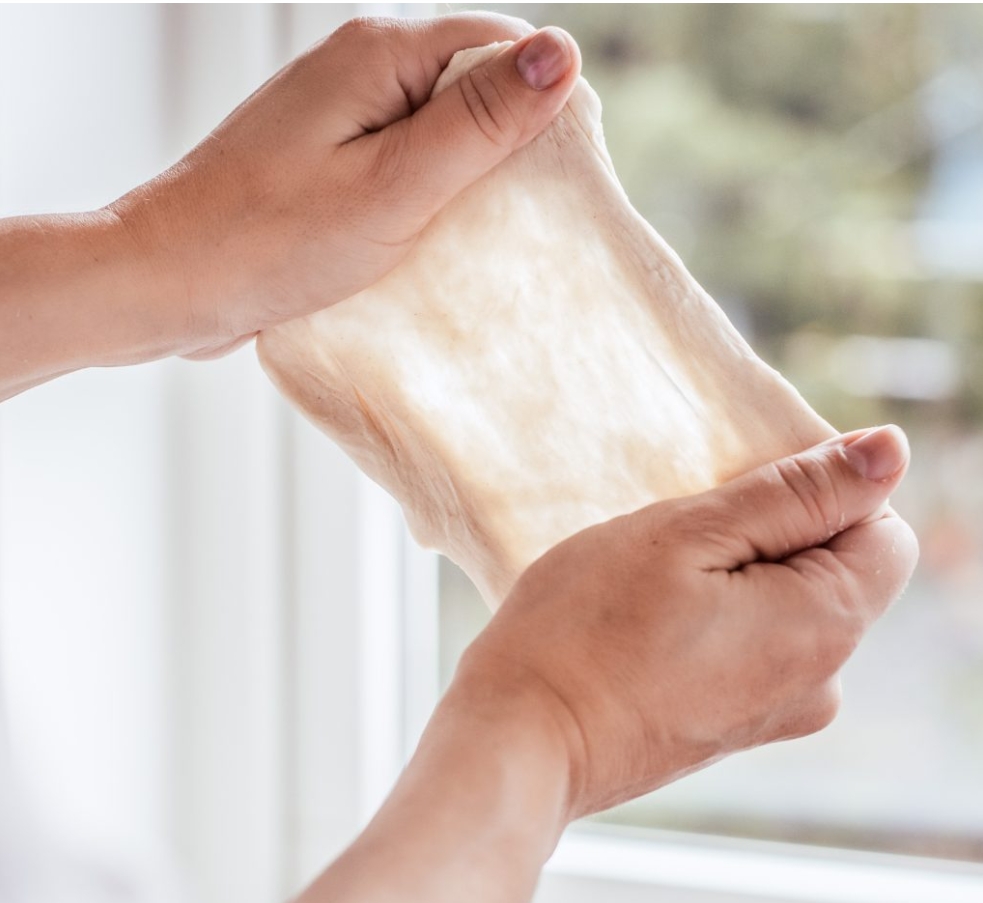
HERE’S HOW YOU CAN DO THE WINDOWPANE TEST AT HOME
Want to see gluten in action? Do this simple windowpane test. After kneading for the specified time, pinch off a small piece of dough and stretch it between your fingers.
-
Well-developed gluten: The dough stretches thin enough to let light through without tearing
-
Underdeveloped gluten: It tears easily or feels sticky and weak
So, the next time you are in awe of the breads you bake, photograph the airy crumb, marvel at the crispy and chewy texture, know that a simple ingredient, gluten is at work. A humble ingredient but also the hero if you will. Happy baking!
 Hello. I'm Shivesh Bhatia, a food blogger and food stylist from Delhi, India. Welcome to Bake With Shivesh, where I'll help you create magic in your kitchens with my simple recipes.