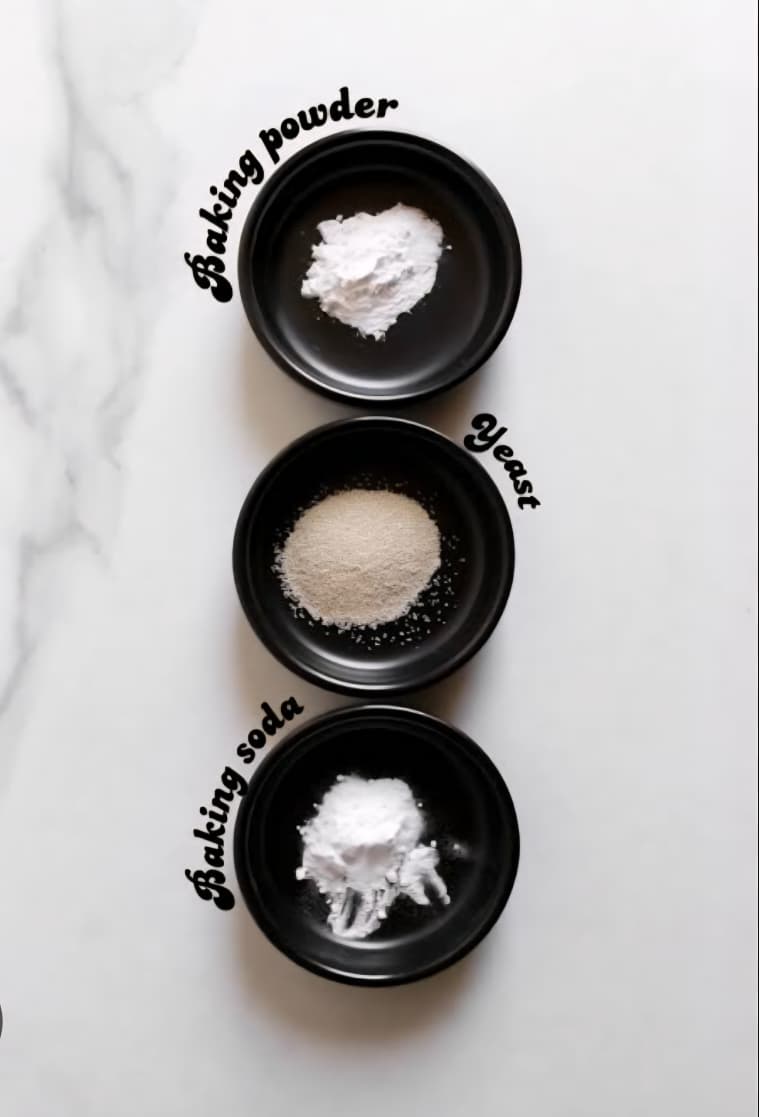
You’ve preheated the oven, measured your ingredients, and started mixing… but what if the magic ingredient that makes your bakes rise — the leavening agent — isn’t working anymore?
Leavening agents such as baking soda, baking powder, and yeast create tiny air bubbles in your batter or dough, giving your cakes a tender crumb, cookies their slight puff, and bread that light, airy texture. But over time, these ingredients lose their ability to produce enough gas for proper rise. Using inactive leaveners can result in heavy, dense, and disappointing baked goods.
The good news? You can test them in minutes before you start baking. Here’s how, along with what’s really happening in each reaction.
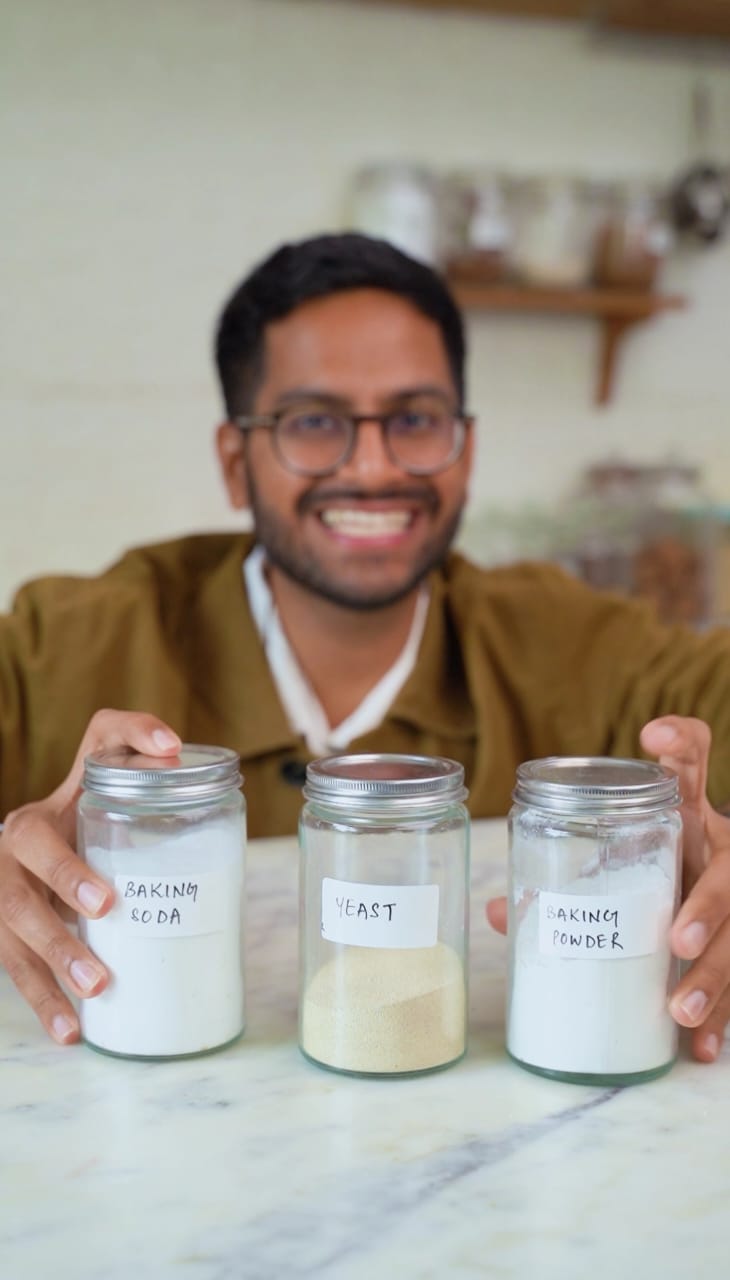
1. Testing Baking Soda (Sodium Bicarbonate)
Shelf life: Around 2 years unopened, but only about 6 months once opened and exposed to air or humidity.
Why test it?
Baking soda works only when paired with an acidic ingredient such as vinegar, lemon juice, yogurt, or buttermilk. When the acid and base react, they produce carbon dioxide gas, which expands in the heat of the oven and gives lift. If your baking soda is old, the reaction will be weak, meaning less gas and less rise.
How to test:
- Measure 1/2 teaspoon baking soda into a small bowl.
- Add 2 teaspoons vinegar or freshly squeezed lemon juice.
What to look for:
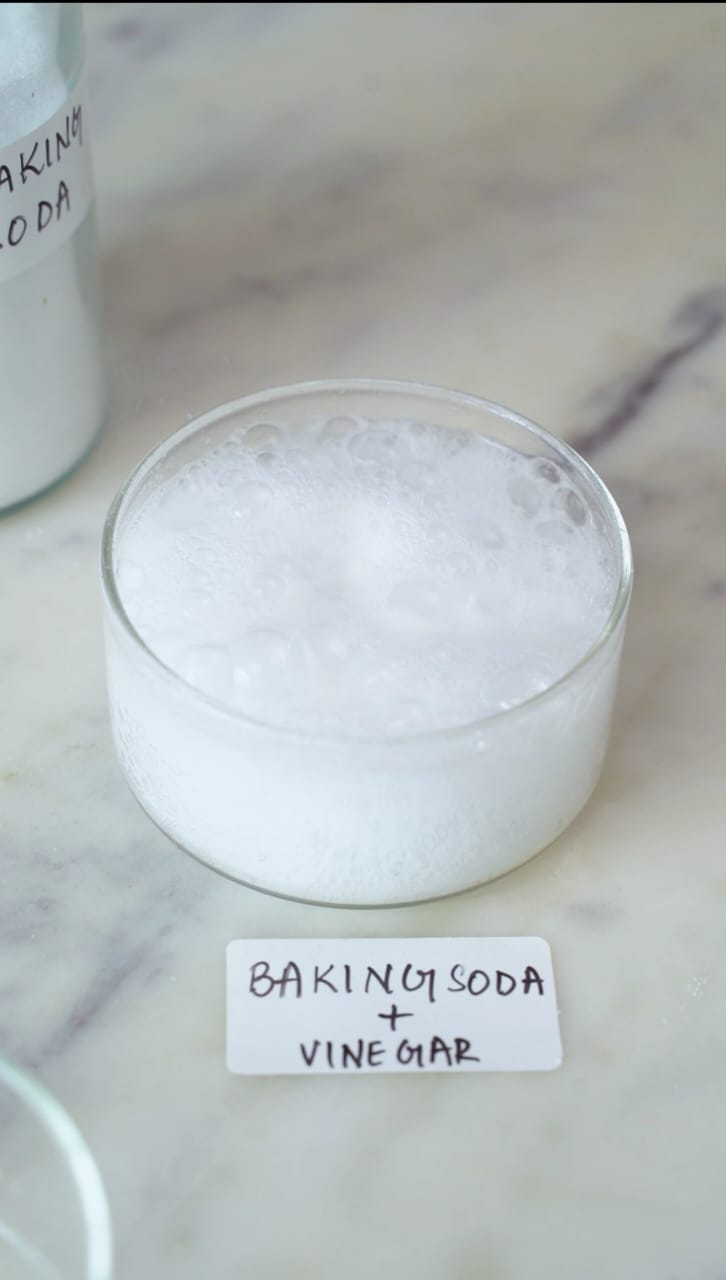
- Fresh baking soda: You’ll see a strong, immediate fizzing and bubbling reaction, with foam rising quickly.
- Inactive baking soda: The fizz will be weak, slow, or almost non-existent — time to toss it.
Why this works:
The acid in vinegar or lemon juice reacts instantly with the alkaline baking soda, producing carbon dioxide gas and water. The bubbling you see is this gas escaping.
2. Testing Baking Powder
Shelf life: About 1 year unopened, 6 months after opening. Exposure to humidity shortens its life.
Why test it?
Baking powder contains both a base (baking soda) and an acid (often cream of tartar), as well as starch to keep them dry. Most modern baking powders are double-acting — they release some gas when mixed with liquid, and more when exposed to heat. If it’s stale, it won’t produce enough carbon dioxide, and your baked goods will be flat.
How to test:
- Place 1/2 teaspoon baking powder in a bowl or mug.
- Pour in 2 tablespoons warm water (not boiling).
What to look for:
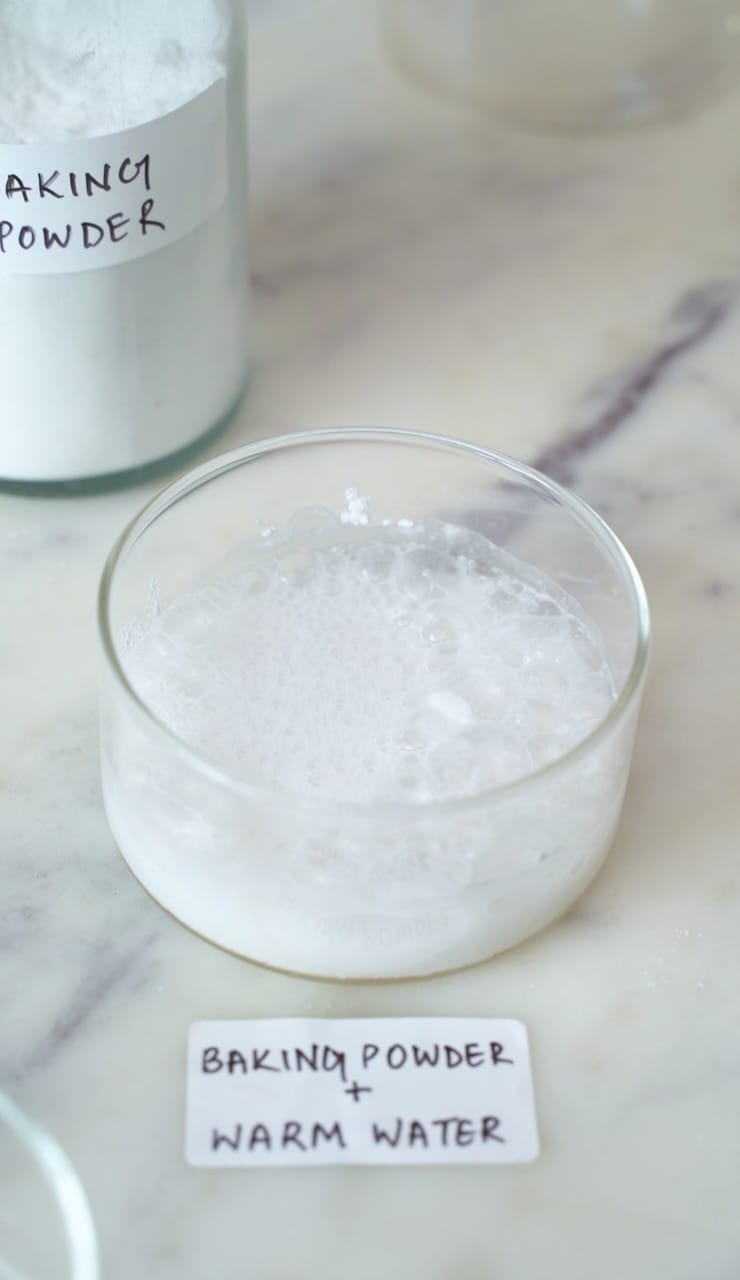
- Fresh baking powder: Strong bubbling and fizzing that lasts at least 20–30 seconds.
- Inactive baking powder: Weak bubbles or no visible fizz.
Why this works:
Warm water activates the acid-base reaction inside the baking powder, producing carbon dioxide gas. The warmth speeds up the release, so you can see the reaction quickly without baking.
3. Testing Yeast
Shelf life:
- Dry yeast (active dry or instant) lasts about 2 years unopened, but only 4–6 months after opening if stored in the fridge or freezer.
- Fresh yeast lasts only 2–3 weeks in the fridge.
Why test it?
Yeast is a living organism (a type of fungus) that ferments sugars, producing carbon dioxide gas and alcohol. The gas expands the dough during proofing, creating the fluffy texture of bread. If the yeast cells have died, fermentation won’t occur, and your bread will be dense.
How to test:
- Measure 1 teaspoon sugar into a small cup or bowl.
- Add 1/4 cup warm water — warm but not hot, or you risk killing the yeast.
- Stir in 1/2 teaspoons yeast
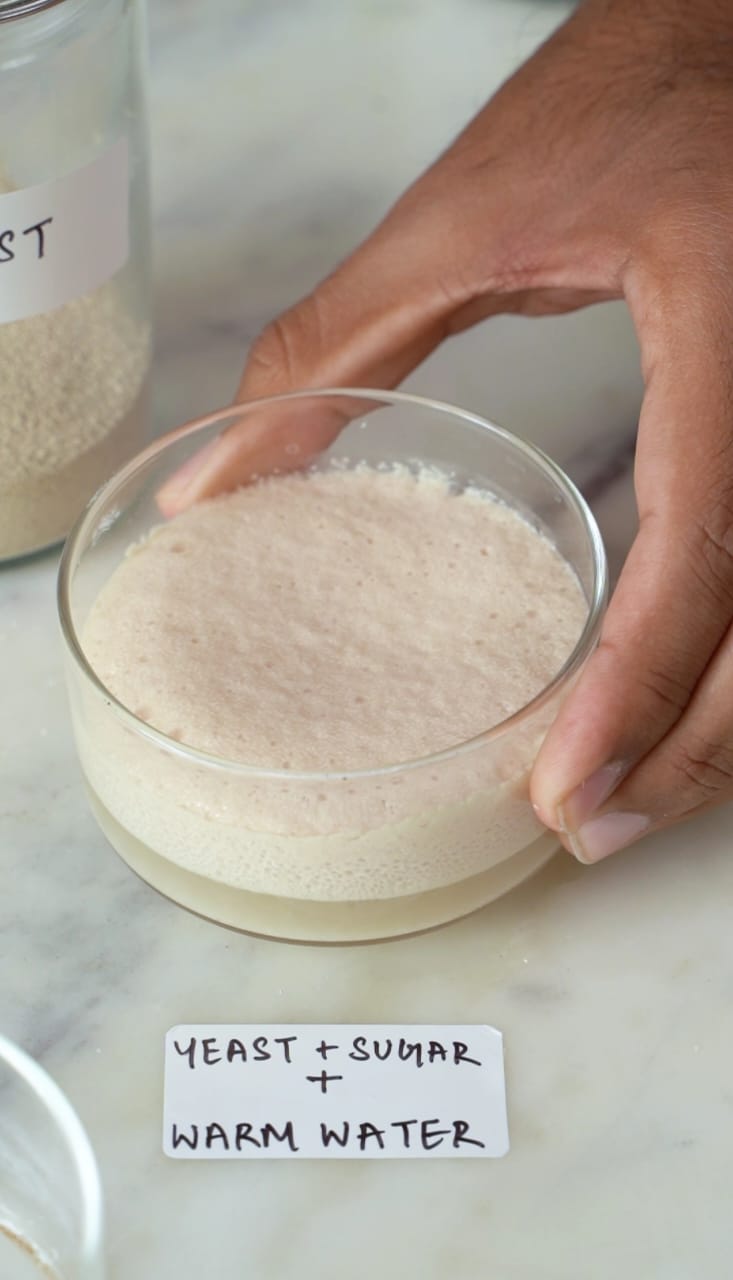
- Leave it undisturbed for 5–10 minutes.
What to look for:
- Active yeast: A thick, foamy layer on top with a pleasant bread-like aroma.
- Inactive yeast: No foam, no bubbles, and no smell — the yeast is dead.
Why this works:
The sugar feeds the yeast, and the warm water wakes it up from its dormant state. Healthy yeast cells start consuming the sugar and releasing carbon dioxide gas during fermentation, creating the foam you see.
Tips to Keep Your Leavening Agents Fresh
- Store baking soda and baking powder in airtight containers away from heat and moisture.
- Keep yeast in the fridge or freezer after opening to extend its life.
- Always check the expiration date — even if unopened, the potency can decrease over time.
- Test before baking if the container has been open for several months.
It takes less than 5 minutes to test a leavening agent, but it can save you hours of work (and ingredients). Think of it as a tiny science experiment that guarantees your bakes will rise beautifully every time.
For better visuals and understanding, check out my reel here on Instagram!
 Hello. I'm Shivesh Bhatia, a food blogger and food stylist from Delhi, India. Welcome to Bake With Shivesh, where I'll help you create magic in your kitchens with my simple recipes.