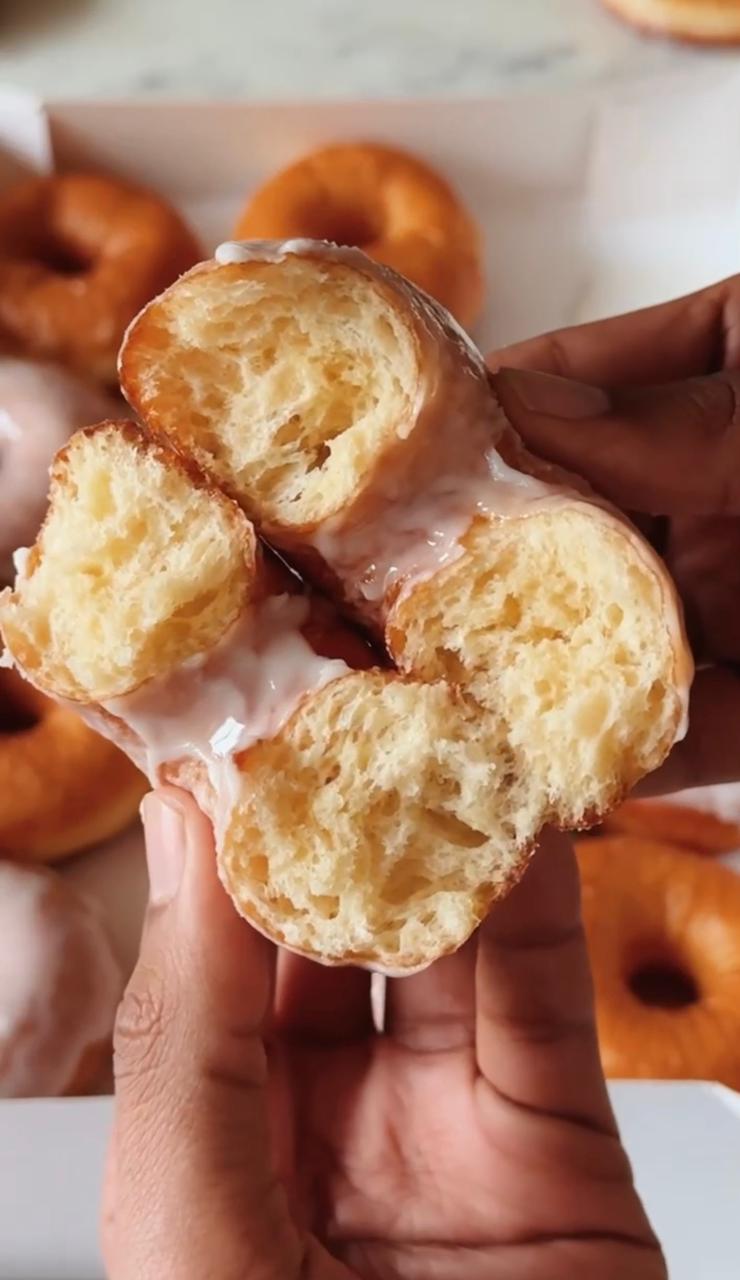
There’s something irresistibly nostalgic about homemade doughnuts — that warm, sweet smell filling up the kitchen, the soft dough puffing up in hot oil, the glossy sugar glaze dripping down the sides. Every time I make these glazed doughnuts, I’m instantly taken back to the simple joy of childhood treats: stopping by the neighbourhood bakery after school, choosing the doughnut with the shiniest glaze, and trying so hard not to finish it before reaching home. As adults, we don’t really get those carefree moments as often, but baking has a magical way of bringing them back. These doughnuts are my way of recreating that comfort — soft, pillowy, slightly warm, dipped in a smooth glaze that tastes like pure indulgence. And the best part? They’re made from scratch, right in your own kitchen, with ingredients you probably already have and a process that feels almost therapeutic.
Making dough by hand, watching it rise, shaping each doughnut, gently lowering them into bubbling oil — it’s slow, grounding, and strangely satisfying. When you finally dip those golden rings into sugar glaze, you realise this recipe isn’t just about doughnuts. It’s about taking a tiny pause from the chaos of life, creating something joyful, and sharing that joy with the people you love (or keeping all the doughnuts for yourself — honestly, no judgement!). This is the kind of recipe that turns an ordinary day into something sweet, simple, and beautifully memorable
WHAT YOU’LL LOVE ABOUT THIS
- Perfect kid-party dessert
- Rich in flavour and texture
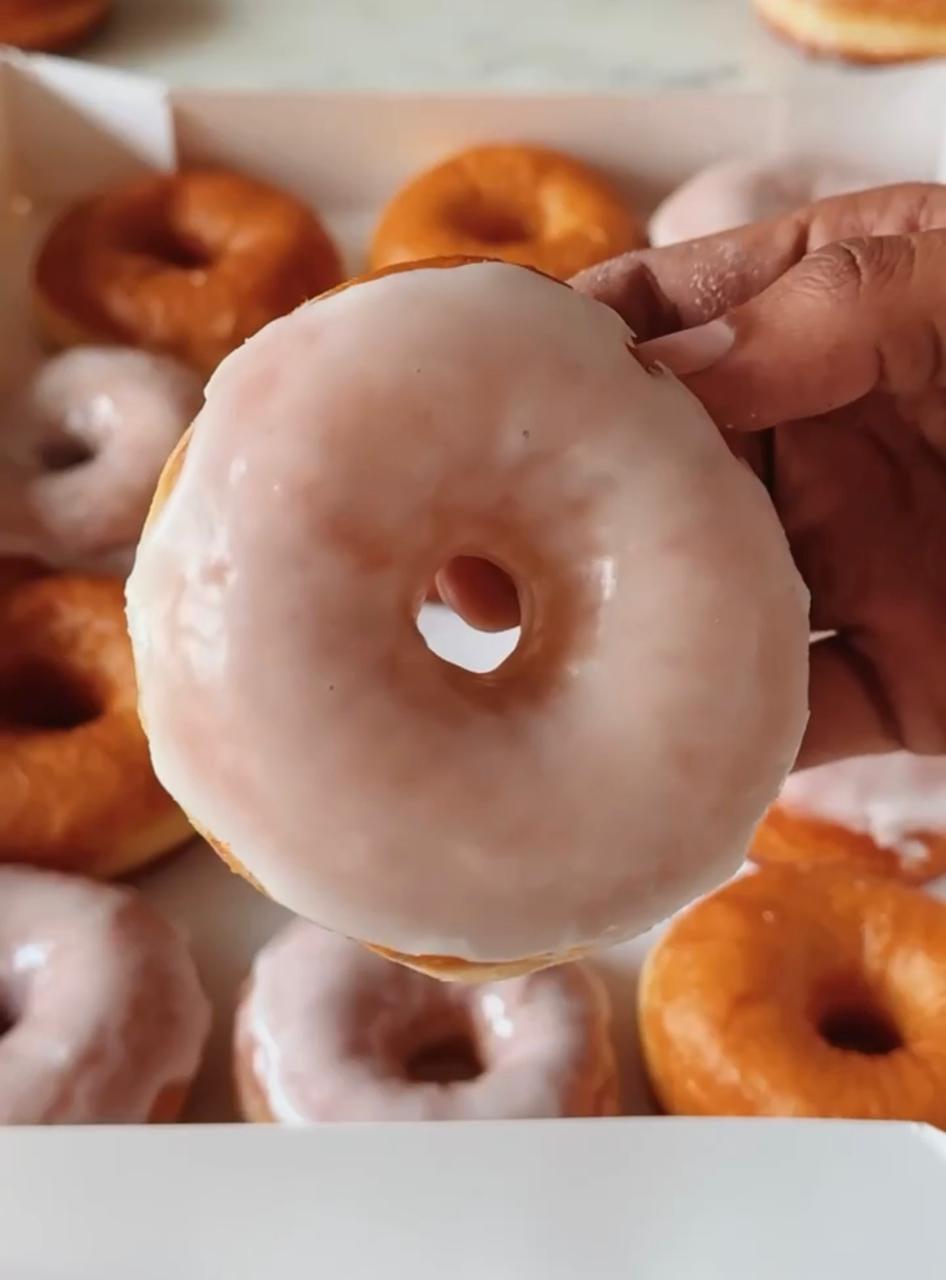
INGREDIENTS USED IN MAKING GLAZED DOUGHNUTS
-
All purpose flour
Flour forms the structure of the doughnuts by developing gluten when mixed and kneaded. It gives the dough elasticity, which helps it stretch and trap air during proofing. This trapped air is what creates that soft, pillowy crumb inside the doughnut. The protein content in flour also affects how fluffy the doughnuts turn out — higher gluten creates more chew, while lower gluten makes them more tender. In deep-fried doughs like doughnuts, flour needs to be strong enough to hold shape without collapsing in hot oil. It also absorbs moisture from the eggs and butter, helping create a cohesive dough. The starch in flour gelatinizes during frying, giving the doughnut its characteristic golden outside and soft inside. Flour also plays a key role in browning as proteins and sugars react in hot oil. Without enough flour, the dough becomes sticky and impossible to shape; with too much, it becomes dense.
-
Eggs
Eggs add richness, moisture, and structure to the doughnut dough. The proteins in eggs help strengthen the gluten network, giving the doughnuts better structure while still remaining soft. The fats in the yolk contribute to tenderness and a luxurious mouthfeel. Eggs also act as an emulsifier, helping fat and water combine smoothly in the dough. They add natural leavening, helping the doughnuts rise higher and become fluffier. Eggs also improve the color of the fried doughnuts, giving them a warm, golden hue. They contribute to the doughnuts’ moisture content, keeping them soft longer. Because they add richness, doughnuts made with eggs taste fuller and more satisfying. Eggs also help the dough become more elastic and easier to shape. Without eggs, doughnuts would be dry, crumbly, and lack depth of flavor.
-
Yeast
Yeast is the leavening agent that makes the doughnuts rise and become airy. It feeds on sugar, producing carbon dioxide gas that gets trapped inside the dough, creating a soft, pillow-like texture. Instant yeast works faster than dry active yeast, reducing the proofing time significantly. It also doesn’t require pre-activation, making the process easier and more beginner-friendly. The fermentation from yeast adds a subtle, pleasant flavor that makes doughnuts taste “bakery-style.” If yeast is expired or incorrectly activated, the doughnuts will not rise and become dense. Yeast also strengthens the dough structure by interacting with gluten. Proper proofing with yeast determines how tall, fluffy, and light your doughnuts will be. Yeast fermentation also helps the doughnuts brown beautifully during frying.
-
Sugar
Sugar feeds the yeast, allowing it to ferment properly and create air bubbles in the dough. It also adds sweetness to the doughnuts, but its role goes far beyond flavor. Sugar tenderizes the dough by competing with gluten for moisture, leading to a softer crumb. It helps the doughnuts brown nicely during frying through caramelization. Sugar also helps retain moisture, keeping the doughnuts soft for longer. It adds a slight crispiness to the outer crust while keeping the inside moist. In the dough, sugar blends smoothly with the liquids, giving a finer texture. It also helps stabilize the dough during proofing. Without sugar, doughnuts would taste flat, rise slowly, and turn out pale.
-
Butter
Butter adds richness and flavor, giving doughnuts a tender, soft bite. The fat coats flour molecules, preventing too much gluten development and keeping the texture delicate. Butter melts during frying, creating tiny air pockets that make the crumb lighter. It also improves the flavor profile, giving doughnuts a slightly buttery, pastry-like aroma. Butter helps improve browning when the doughnuts fry. It adds moisture that keeps the doughnuts from drying out quickly. The softened texture helps it blend smoothly into the dough without clumping. Butter also enhances the overall mouthfeel, making the doughnuts feel indulgent. Because it tenderizes the dough, it prevents doughnuts from becoming tough.
-
Water
Water hydrates the flour, helping gluten develop properly in the dough. Using lukewarm water activates the yeast at the ideal temperature, helping the dough rise well. If the water is too hot, it kills the yeast; too cold, and the dough won’t ferment enough. Water also blends with sugar and yeast, creating the environment needed for fermentation to begin. It helps bring the dough together, making it smoother and easier to knead. Water also contributes to the final doughnut’s moisture content, preventing them from becoming dry or crumbly. While the amount is small, it’s crucial for starting the dough structure. During frying, moisture in the dough turns to steam, helping the doughnuts puff up beautifully. Water also affects the softness of the crumb, making the doughnuts light instead of dense. It’s a small ingredient, but essential for activating yeast, binding ingredients, and ensuring a fluffy final product
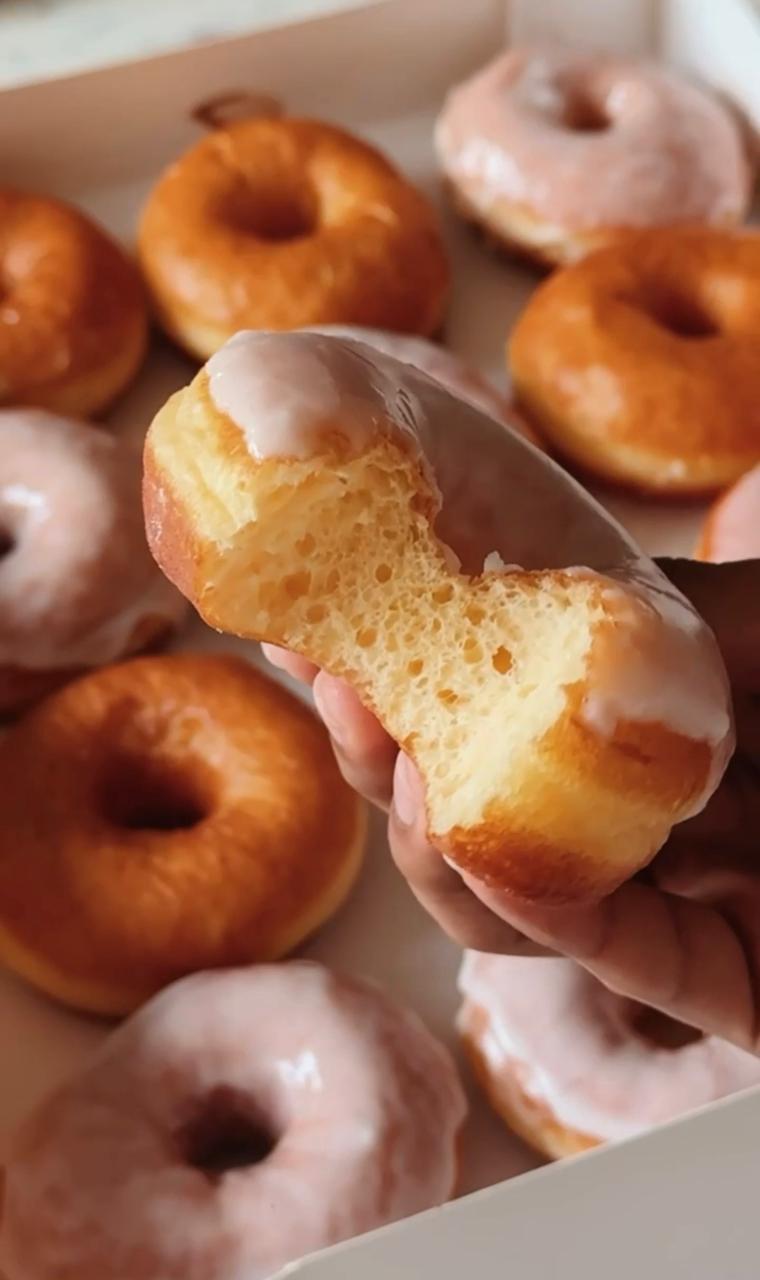
EQUIPMENTS USED IN MAKING GLAZED DOUGHNUTS
This dough comes together without needing a lot of equipment.
Measuring Cups and Measuring Spoons. are an integral part of any baker’s kitchen and it’s very important to measure ingredients with precision.
I’ve fried these doughnuts in my stahl kadhai.
OTHER RELATED RECIPES FROM THE BLOG
TIPS TO MAKE GLAZED DOUGHNUTS
- Use water that’s lukewarm, not hot — around 38–40°C. If it’s too hot, it kills the yeast; too cold, and the dough won’t rise well. A good rule: if it feels like warm bath water, it’s perfect
- Wait for the dough to double in size, even if it takes extra time depending on weather. Proper proofing gives doughnuts their airy, cotton-soft texture. If the dough feels cold, place it inside a switched-off microwave or oven.
- Flip doughnuts gently halfway through frying. Flipping multiple times deflates the dough and can make the texture heavy.
- Let freshly fried doughnuts rest on a wire rack or paper towel. This prevents sogginess and helps them stay crisp on the outside and soft inside.
- Fry 2–3 doughnuts at a time. Overcrowding lowers oil temperature and makes doughnuts oily and unevenly cooked.
- For the dough:
- 3 cups flour
- ¼ cup water, lukewarm
- 4 tsp instant yeast
- ¼ cup caster sugar
- 4 eggs
- 4 tbsp (56g) butter, softened
- Oil, for frying
- For the chocolate glaze
- ¾ cup icing sugar
- ¼ cup milk
- In a small bowl, mix the lukewarm water with the instant yeast and a pinch of sugar. Stir briefly and let it sit for 2–3 minutes.
- In a large mixing bowl, add the flour, caster sugar, eggs, and the yeast mixture. Start mixing everything together using a wooden spoon or with the dough hook attachment of your stand mixer.Your dough will look sticky at this stage — that’s normal.
- Once the dough starts coming together, add the softened butter. Knead for 8–10 minutes (or longer by hand) until the dough becomes smooth, stretchy, and slightly tacky but not sticky. Well-kneaded dough ensures soft, pillowy doughnuts that fry evenly.
- Place the dough in a lightly oiled bowl, cover it with a cloth or cling wrap, and let it rise for 1–1.5 hours or until doubled in size.
- Punch down the risen dough to release air. Dust your counter with flour and roll the dough to about ½ inch thickness.
- Use a round cutter to cut doughnut shapes and a smaller cutter for the centers.
- Place the cut doughnuts on a parchment-lined tray, cover lightly with a cloth, and let them rise again for 30-40 minutes. This step gives doughnuts that signature light, airy texture.
- Pour oil into a deep pan and heat it to around 170–175°C. If you don't have a thermometer, test by dropping in a small dough piece — it should rise slowly and steadily, not instantly brown.
- Carefully slide doughnuts into the hot oil. Fry 1–2 minutes per side until golden brown. Remove and place on paper towels to drain excess oil.
- To make the glaze, mix the icing sugar with milk until smooth and shiny. Dip the cooled doughnuts into the glaze, letting the excess drip off. Place on a cooling rack to allow the glaze to set slightly.
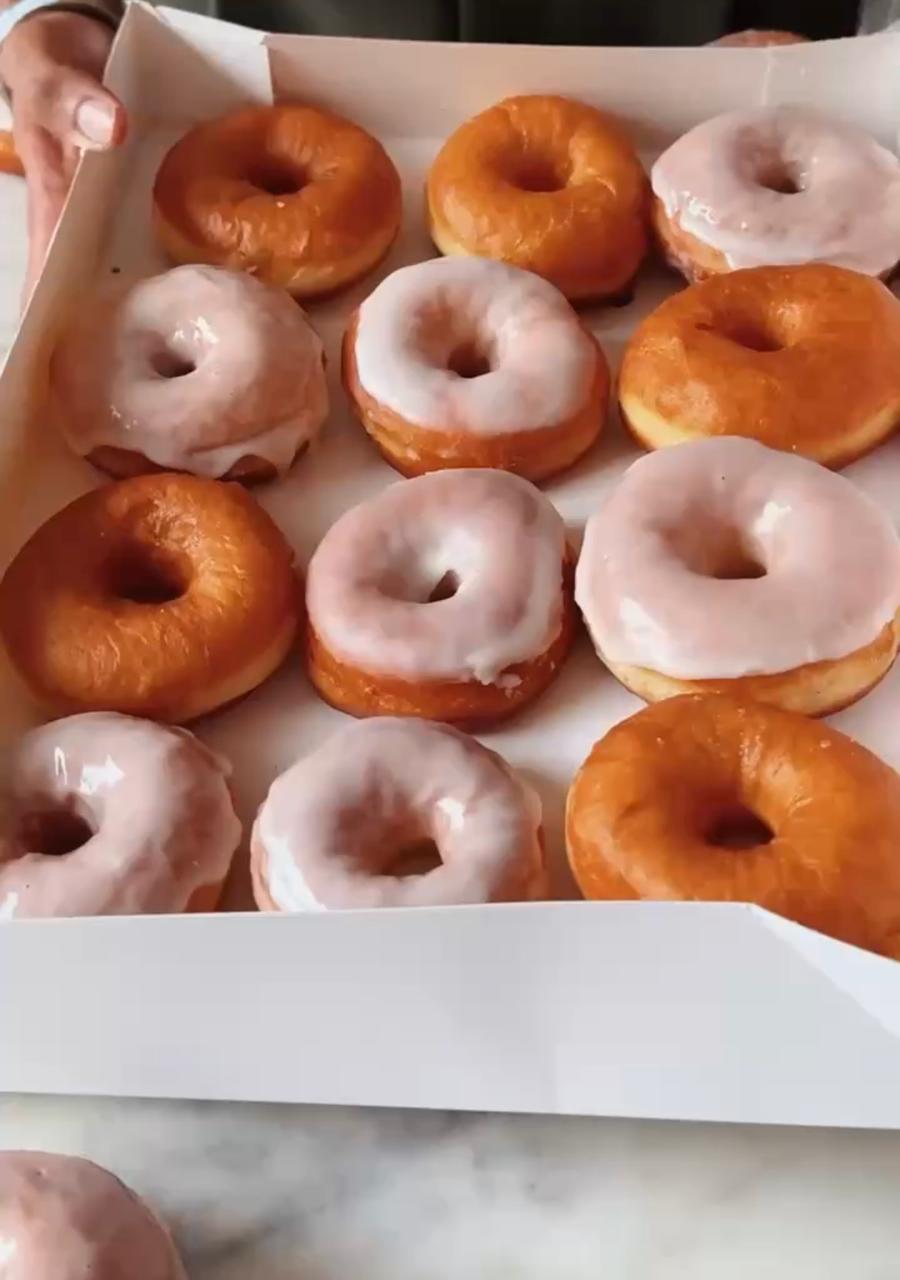
If you like my Glazed Doughnuts recipe and happen to make them in your kitchen, do tag me on Instagram and share pictures with me using #Bakewithshivesh. Happy Baking!
 Hello. I'm Shivesh Bhatia, a food blogger and food stylist from Delhi, India. Welcome to Bake With Shivesh, where I'll help you create magic in your kitchens with my simple recipes.