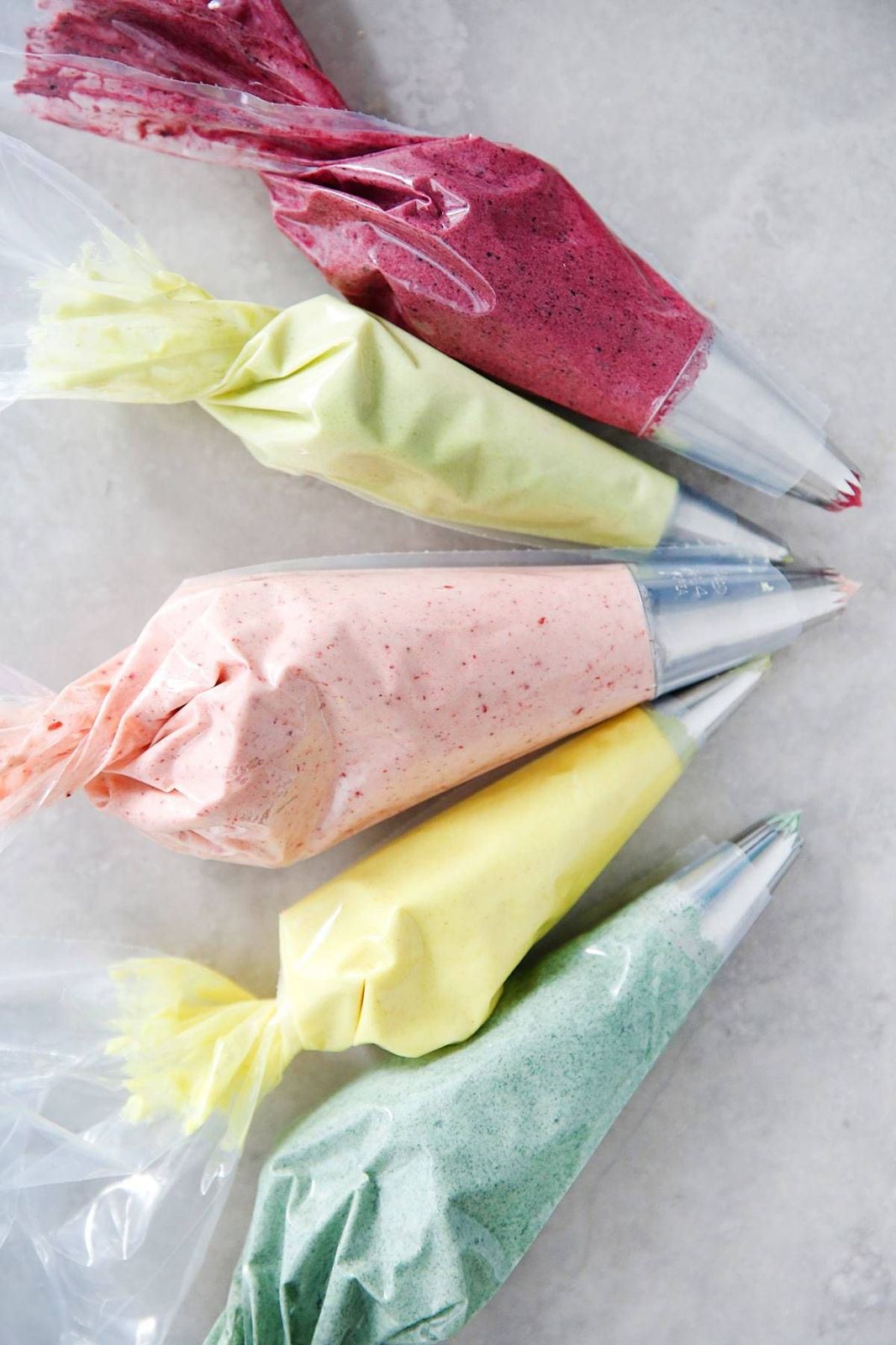
Colour is one of the most powerful tools in baking. It sets the mood of a dessert, highlights creativity, and elevates even the simplest sweet into something stunning. But behind every perfectly coloured macaron, vibrant buttercream swirl, or rich red velvet cake lies one important decision: which type of food colour to use.
Bakers often struggle with inconsistent shades, runny buttercream, or dull tones simply because they chose the wrong type of food colouring.
This blog breaks down everything you need to know about gel, liquid, and powder food colours, their science, best uses, pros, cons, and which one truly works best.
Understanding Food Colouring: The Science
Food colour is basically pigment + carrier.
- Pigment gives the colour
- Carrier (liquid, gel base, or powder form) decides how the colour behaves in a recipe
The type of carrier affects:
- Intensity of colour
- How quickly it mixes
- Whether it alters texture
- How stable it stays during baking
That’s why the exact same shade behaves differently in cakes, meringues, chocolate, and frosting.
1. Liquid Food Colour: The Basic, Water-Based Colour
Liquid food colour is the most common and widely available type. It’s usually a combination of synthetic dyes + water + small amounts of preservative.
How It Behaves
Because it is water-based and highly diluted, it adds moisture to recipes. This is not noticeable in watery mixtures like drinks, but can impact batters and doughs.
Liquid colours perform best in:
- Drinks (milkshakes, mocktails, lemonades)
- Simple glazes
- Pancake batters
- Basic cake batters requiring only a light tint
Advantages
- Very easy to use
- Mixes instantly into wet ingredients
- Budget-friendly
- Perfect for beginners
Disadvantages
- Lowest pigmentation
- Requires a lot to achieve deeper hues
- Can thin out batters or buttercream
- Colour may fade during baking
- Can cause buttercream to split if overused
Avoid Liquid Food Colour When:
- Making macarons (adds unwanted moisture)
- Colouring chocolate (water causes seizing)
- Making deep red velvet, black, navy, or hot pink
- Making royal icing or meringue cookies
- Making thick cookie doughs
2. Gel Food Colour: The Most Versatile and Popular Option
Gel food colouring is made from concentrated pigments suspended in a thick gel base (usually glycerin, corn syrup, and a tiny amount of water).
This makes it intensely coloured without excess liquid.
How Gel Colour Behaves
Its thick texture ensures the colour stays stable, mixes smoothly, and doesn’t alter the consistency of doughs or frostings.
Gel is the preferred choice for:
- American, Swiss, and Italian meringue buttercreams
- Cakes (especially rainbow, red velvet, and theme cakes)
- Cookie doughs
- Royal icing
- Fondant colouring
- Cupcake frostings
- Bold colours (black, red, blue, purple)
- Drip cakes
- Cream cheese frosting
- Baked cheesecakes
Advantages
- Highly concentrated
- A tiny drop gives strong colour
- Doesn’t water down your mixture
- Provides smooth, streak-free results
- Works well in almost all baking applications
- Holds colour during baking
- Best for professional cake decorating
Disadvantages
- Slightly more expensive
- Can be harder to mix into very dry doughs
- May deepen over time (“developing colour effect”), requiring planned usage
- Too much can affect meringue-based batters (like macarons)
Summary:
Gel colour is the best all-rounder—giving intense colour payoff without changing the texture of your dessert.
3. Powder Food Colour: The Pure Pigment Powerhouse
Powder food colour contains no liquid at all—it’s just pure pigment ground into a fine powder.
It’s the most concentrated form of colouring and the most stable.
How Powder Colour Behaves
Since it contains zero moisture, it keeps textures intact. But it needs time to dissolve in wet mixtures and can clump if not mixed properly.
Best Uses for Powder Food Colour
- Macarons (most recommended)
- Chocolates (cocoa butter-friendly variants)
- Meringues
- Dry spice blends or latte blends
- Candy melts
- Dusting decorations
- Baked goods where deep colour is needed with no moisture
- Doughs that must not get soft (sugar cookies, shortbread)
Advantages
- Most concentrated
- Does not alter moisture balance at all
- Best for high-temperature baking (stable pigments)
- Long shelf life
- Perfect for powdered mixes
- Gives intense, bright colour
Disadvantages
- More expensive
- Harder to mix
- Requires technique to avoid specks
- Can stain hands or counters easily
- Limited availability in some colours
Avoid Powder Colour When:
- You need instant blending (quick frostings)
- Working with plain buttercream (can leave specks if not dissolved well)
- You’re a beginner
Summary:
Powder colour is the professional choice for macarons, chocolates, and dry mixes—where texture and precision matter.
CONCLUSION
Liquid, gel, and powder food colours each behave differently, and choosing the right one is key for perfect results. Liquid colour is the weakest and most diluted, best only for drinks, glazes, and light batters since it adds moisture and cannot achieve deep shades.
Gel colour is the most versatile and widely used—highly pigmented, thick, and ideal for cakes, buttercream, cookie dough, royal icing, and all vibrant or deep colours without altering texture.
Powder colour is the most concentrated and contains zero moisture, making it essential for macarons, chocolates, meringues, and dry mixes where texture control matters, though it can be harder to mix. Overall, gel colour works best for most baking needs, powder is superior for macarons and chocolate, and liquid is suitable only for simple, light colouring in wet mixtures.
 Hello. I'm Shivesh Bhatia, a food blogger and food stylist from Delhi, India. Welcome to Bake With Shivesh, where I'll help you create magic in your kitchens with my simple recipes.